home I index I latest I glossary I introductions I e-mail I about this site
St Peter and St Paul, Swaffham
Read
the captions by hovering over the images, and click on them to
see them enlarged.
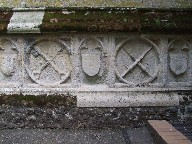
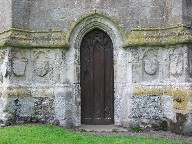
St Peter
and St Paul, Swaffham
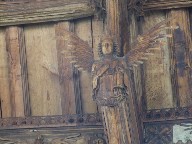
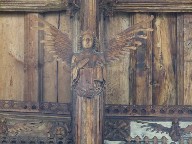
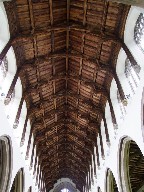
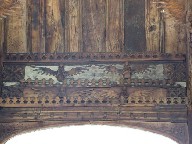
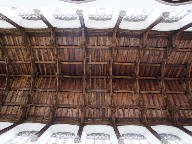
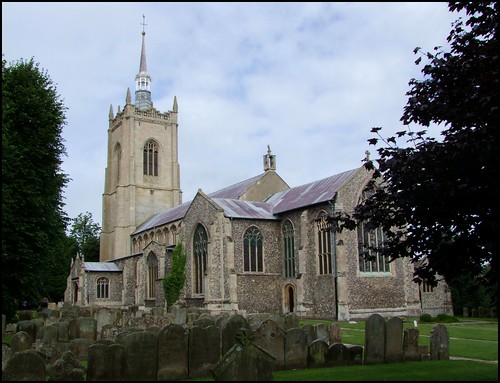
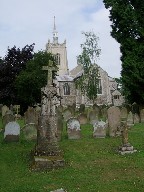
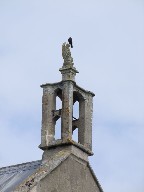
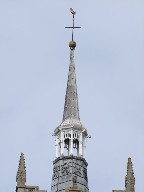
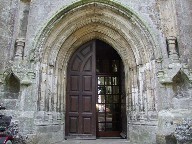
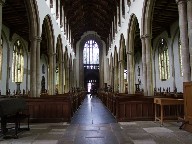
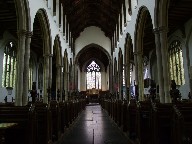
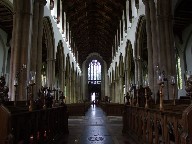
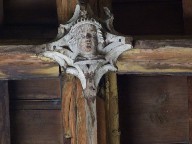
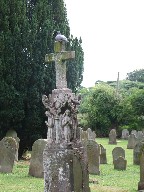
The lead and wood fleche on top of the tower is 19th Century, but it replaced a similar earlier structure. There are aisles and clerestories to north and south, as well as a large transept chapel on the south side. The churchyard stretches away to the east, with no shortage of good 18th and 19th Century headstones, a suggestion of quite how wealthy this town has been over the last few hundred years. You enter the church through the great west doorway, one of the grandest entrances to any Norfolk church, and the sheer bulk of the building spreads out before you. This is a church which seems larger inside than out. The space is topped off by a fine late medieval angel roof, which is said to be chestnut (although I have heard of several medieval chestnut roofs in East Anglia which, on proper investigation, turned out to be oak after all).
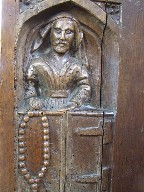
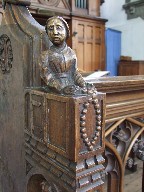
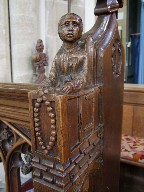
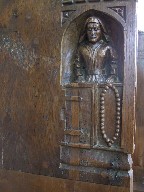
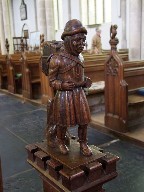
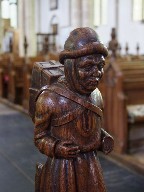
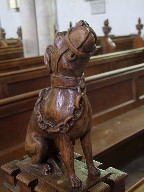
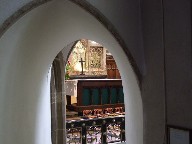
Perhaps inevitably, St Peter and St Paul underwent as extensive a restoration in the 19th Century as any small town church, giving it an urban and somewhat anonymous character inside. Nevertheless, there are some good early survivals, the best of which are perhaps the figures on stalls in the chancel which peer out, rosaries in hand, presumably 15th Century donors.Opposite them is a large 19th Century bench end of man and his dog, the Pedlar of Swaffham, of which more in a moment.
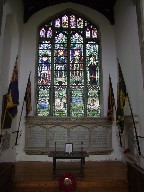
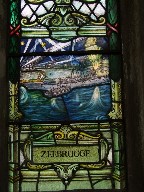
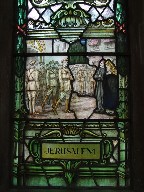
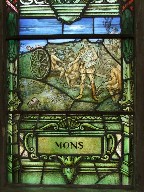
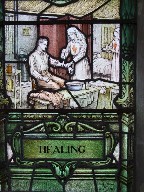
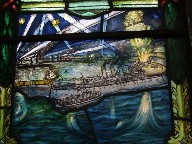
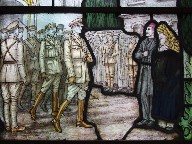
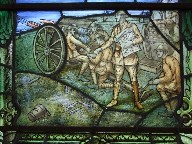
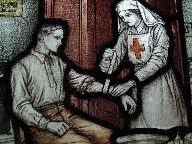
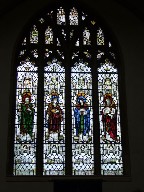
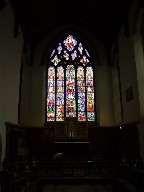
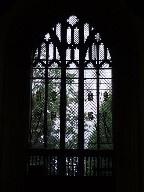
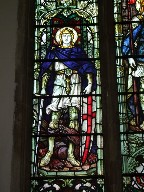
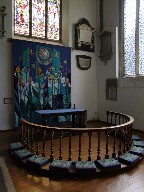
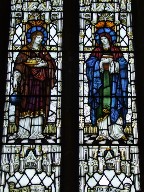
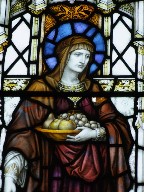
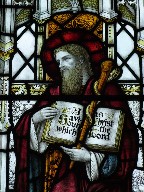
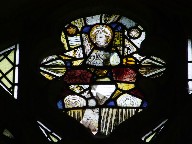
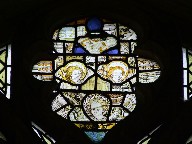
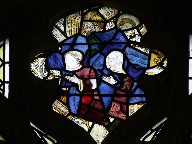
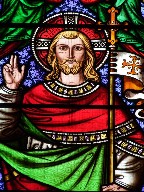
The story of the Pedlar of Swaffham is interesting, because it relates to this church as we see it today. In the legend, John Chapman, the pedlar in question, learns of the whereabouts of a large sum of money in a dream, finds it and gives it to provide the church with a north aisle and the magnificent tower. Interestingly, the upper lights of the north aisle are now filled with figures in 15th Century glass, some of which are angels, but some of which are clearly donors. There are more medieval panels in the west window. The best-known glass in the church, however, is modern. It is in the south transept, the former chapel of the guild of Corpus Christi. This is now the WWI memorial chapel, and its main feature is a large window by William Morris of Westminster. The four main figures are St George, St Martin, St Michael and the Blessed Virgin, but perhaps more interesting are the smaller panels at the bottom, which depict the fighting at Zeebrugge, Jerusalem and Mons, and a scene inside a field hospital. The archangel Michael is shown above the scene of Mons, on the Western Front, where it was widely believed at the time that a host of angels had led the British troops into battle.
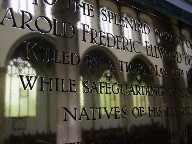
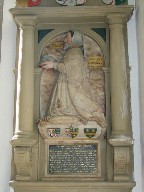
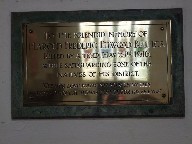
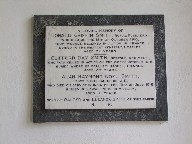
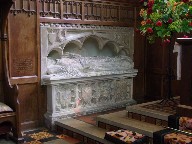
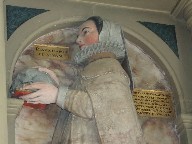
John Botright, the 15th Century rector of the church who oversaw the late medieval rebuilding of the nave and chancel, lies in effigy on the northern side of the sanctuary. Unfortunately, he suffered the ignomy of having his tomb canopy lowered by the 19th Century restorers. The jagged cusping of the arch comes down to just above his body, to the extent that it looks as if he is being eaten by his own tomb. In the south aisle chapel lies Katherine Steward. She died in 1590, and now kneels piously regarding the modern sanctuary furnishings, holding a huge and hideous skull in her hands. What gives her added significance is that she was Oliver Cromwell's grandmother. More alarming even than Katherine Steward's skull is an inscription on a modern brass nearby to the Splendid Memory of Harold Frederick Ellwood Bell ICS, who was killed by a tiger in 1916 while safeguarding some of the natives of his district. I assume that he suffered this fate in some far-flung corner of the British Empire rather than unexpectedly in a local field - although, of course, strange things do happen in Norfolk. |
Simon Knott, September 2009
|
||||||||||||||||||||||||||||||||||||||||||||||||||||||
home I index I latest I introductions I e-mail I about
this site I glossary
Norwich I ruined churches I desktop backgrounds I round tower churches
links I small
print I www.simonknott.co.uk I www.suffolkchurches.co.uk