home I index I latest I glossary I introductions I e-mail I about this site
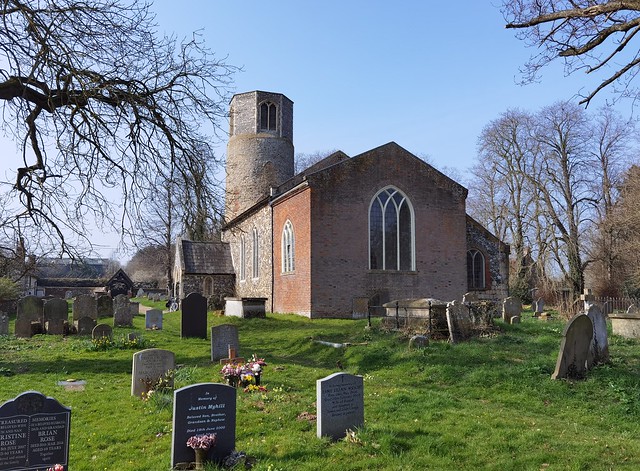
St Mary, Surlingham


Follow these journeys as they happen at Last Of England Twitter.
St Mary, Surlingham Surlingham is a lovely place, not
far removed from Norwich but hidden away in the bend of
the great, wide river. It feels more remote than it is.
When Arthur Mee came here in the 1940s he bemoaned the
fact that the setting of the church was spoilt by the
aunt sallies of the petrol age, by which he meant
the village petrol pumps, probably set up outside the old
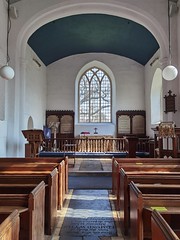
smithy. But they are long gone today, alas. The south doorway opens into a nave
which is full of white light, a pretty interior, with a
gallery at the west end which looks as if it might have
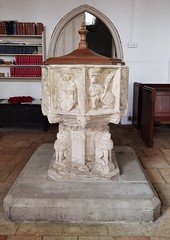
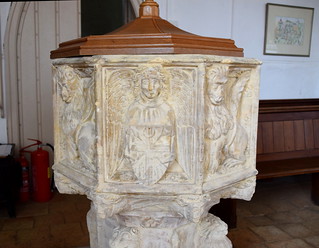
been a layer of a wedding cake. By contrast, the 15th
Century font is like a melting cheese, with deep set
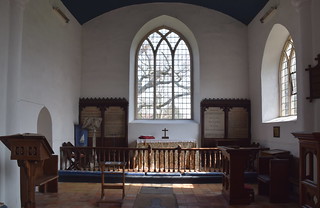
reliefs in the traditional East Anglian manner. The green
ceiling of the chancel and the wooden framed east window
give it a jolly organic feel. All in all, properly
Anglican, with a sense of being well-loved and cared for. Outside, the cow parsley to the east and north of the church is alive in summer with flitting and stumbling bees, all busy collecting nectar. Perhaps they are descendants of the ones that John Alnwick and Richard Louhawkys knew. A few hundred yards to the east of the church, along a track that runs to the north of the churchyard, is the ruin of St Saviour, Surlingham's other church. There were still presentations to the living into the start of the 18th Century, but soon afterwards the two parishes were consolidated, and St Saviour was abandoned. Simon Knott, March 2022 Follow these journeys as they happen at Last Of England Twitter.
|
|
|||||||||||||||||||||||||||||||||||||||||||||||||||||||
home I index I latest I introductions I e-mail I about
this site I glossary
Norwich I ruined churches I desktop backgrounds I round tower churches
links I small
print I www.simonknott.co.uk I www.suffolkchurches.co.uk