home I index I latest I glossary I introductions I e-mail I about this site
St Mary, Stody

Follow these journeys as they happen at Last Of England Twitter.
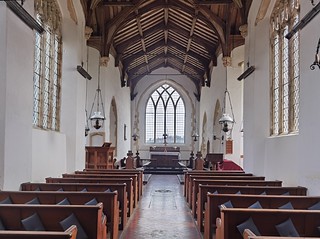
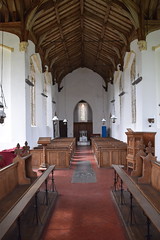
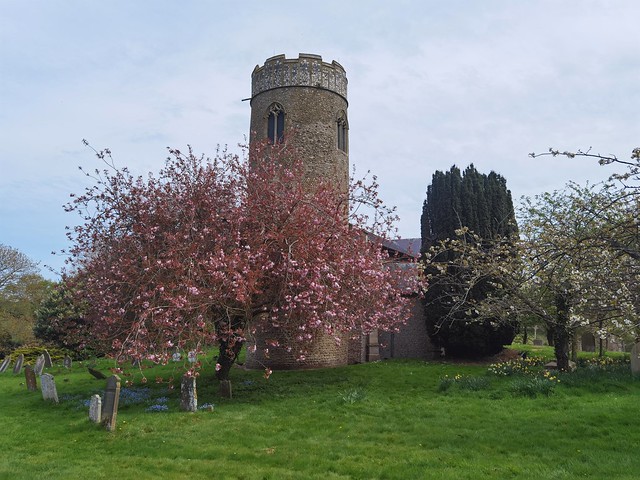
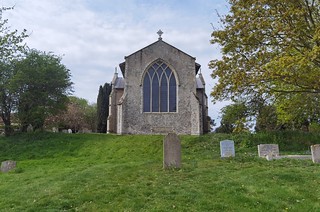
St Mary, Stody It is always a delight
to be lost in the meandering, narrow lanes of north
Norfolk, and Stody is particularly pleasing in its
remoteness, with sharply doglegging lanes deeply cut
beneath cushion-like fields giving occasional glimpses of
this church across the fields. The curious name of the
parish means simply 'an enclosure for horses', the word
'stud' coming from the same root. The 12th Century round
tower of the parish church morphs seamlessly into its
14th Century bell stage, and then the end of the medieval
period brought the attractive bell top. As you come
closer the church rises above a steep bend, best seen
from the road to Hunworth where its lovely east end and
transepts splay beneath the tower. Cruciform round
towered churches are unusual, although there is another
not far off at Great Ryburgh.
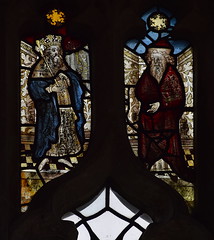
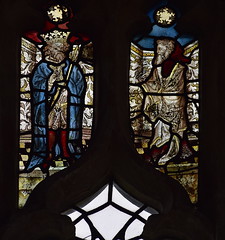
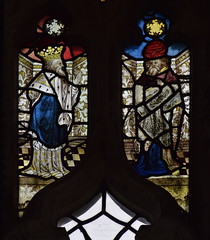
Broadly speaking,
there are four different groups. Firstly, pairs of Kings
and Prophets as on the contemporary screen at Kersey in
Suffolk. The juxtaposition of Kings and Prophets seems to
have been a late medieval enthusiasm, sometimes pairing
historical English King saints with the Old Testament
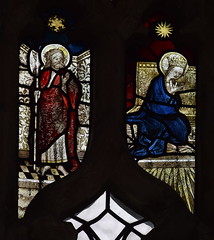
Prophets. Also in the lights on this side are the remains
of a set of Apostles, and, most interesting perhaps, a
Coronation of the Blessed Virgin, which was probably part
of an extensive scheme of Marian images. Finally, in the
transept is part of a set of female Saints. Simon Knott, May 2022 Follow these journeys as they happen at Last Of England Twitter.
|
|
|||||||||||||||||||||||||||||||||||||||||||||||||||||||
home I index I latest I introductions I e-mail I about
this site I glossary
Norwich I ruined churches I desktop backgrounds I round tower churches
links I small
print I www.simonknott.co.uk I www.suffolkchurches.co.uk