home I index I latest I glossary I introductions I e-mail I about this site
St Margaret, Paston


Follow these journeys as they happen at Last Of England Twitter.
| St
Margaret, Paston Norfolk had
more than its fair share of rich and powerful families in
the 14th and 15th centuries. The Pastons are perhaps more
famous than most because of the letters they left behind,
and we know more about them because of this. In published
form, the letters are often hard work, but provide
intriguing glimpses of the life of the county set on the
eve of the Reformation. The family weren't actually top
notch, but, as with many second rank county families,
they derived a long term benefit from the Black Death,
stepping into the shoes of larger land owners as estates
broke up, and enjoying the fruits of rising market
prices.
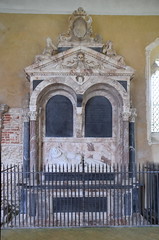
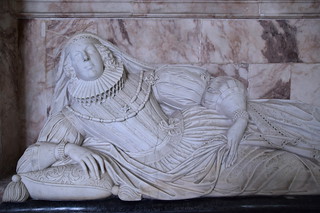
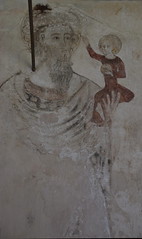
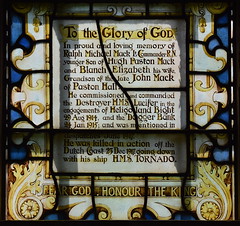
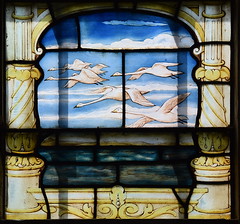
When the church was rebuilt, wall-paintings covered the inside, and in the 1920s some of them were rediscovered. On the north wall is the top half of a big St Christopher, and further along two parts of a Three Living and Three Dead. The skeletons are conventional enough, but the three noblemen are very animated, one beckoning to the other to come and look. This particular subject was very popular in the years after the Black Death, a meditation and reminder, as if you needed one, on mortality: As you are so once were we, the skeletons point out, as we are so you will be, therefore prepare to follow me... The Paston memorials are vast, but don't completely overwhelm the chancel, being tucked almost discreetly back against the north wall. Elsewhere, I was pleased to find the original handwritten roll of honour from the First World War, one of several in churches around here. One of those remembered there is Ralph Michael Mack, a Lieutenant Commander in the Royal Navy who, it is recorded on a brass plaque elsewhere, was lost with his ship HMS Tornado by enemy action in the North Sea December 23rd 1917. A striking window by Horace Wilkinson across the nave also remembers Mack, and depicts him as St Michael standing between two angels. Beneath, two panels show HMS Torpedo and five wild swans flying home. Other Mack memorials in the church remember Arthur Paston Mack, killed in action at the Battle of the Somme at the age of 53, and Rear Admiral Philip John Mack, killed flying on active service in 1943, the poignant story of a landed family in the first half of the 20th Century. Simon Knott, August 2019 Follow these journeys as they happen at Last Of England Twitter.
|
|
|||||||||||||||||||||||||||||||||||||||||||||||||||||||
|
|||||||||||||||||||||||||||||||||||||||||||||||||||||||
home I index I latest I introductions I e-mail I about
this site I glossary
Norwich I ruined churches I desktop backgrounds I round tower churches
links I small
print I www.simonknott.co.uk I www.suffolkchurches.co.uk