| |
|
St Peter
and St Paul, Oulton
 |
|
The
area between Aylsham and Holt can seem among the
most remote in Norfolk, a landscape of scattered
villages unknown to the busy traffic a few miles
off on the Cromer road. Here, grand houses still
stand among woods and fields, and a lattice of
undulating lanes still bears mute witness to the
pattern of the past. At a lost crossroads where
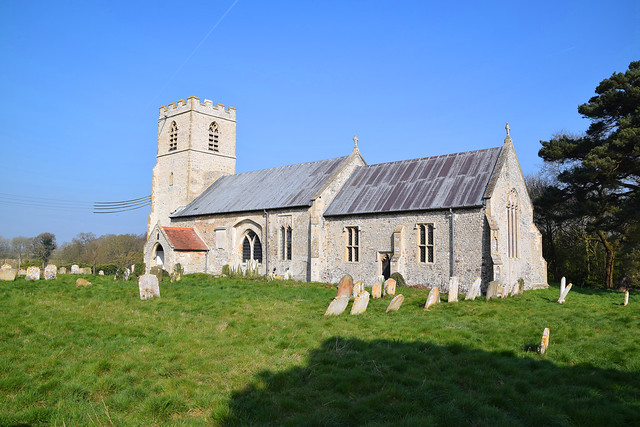
four deep cut narrow roadways meet is St Peter
and St Paul, not far from the great Hall. Elms
and oaks are all about, their treetops restless
on this late summer day. When the wind drops, you
can hear a car approaching from miles off - but
not many come this way. The
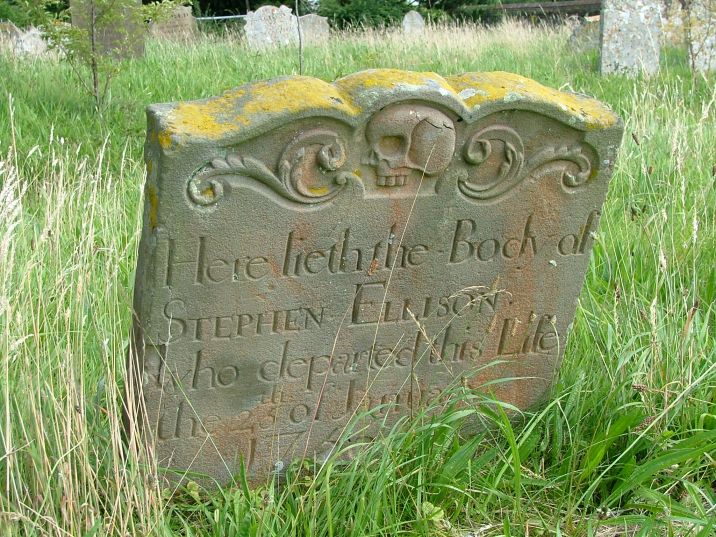
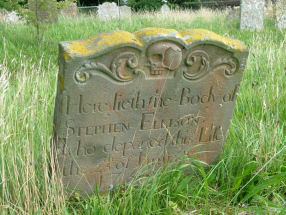
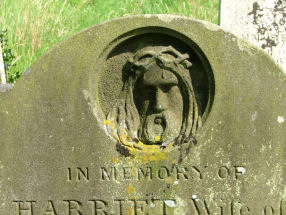
peaceful churchyard is a pleasant place to
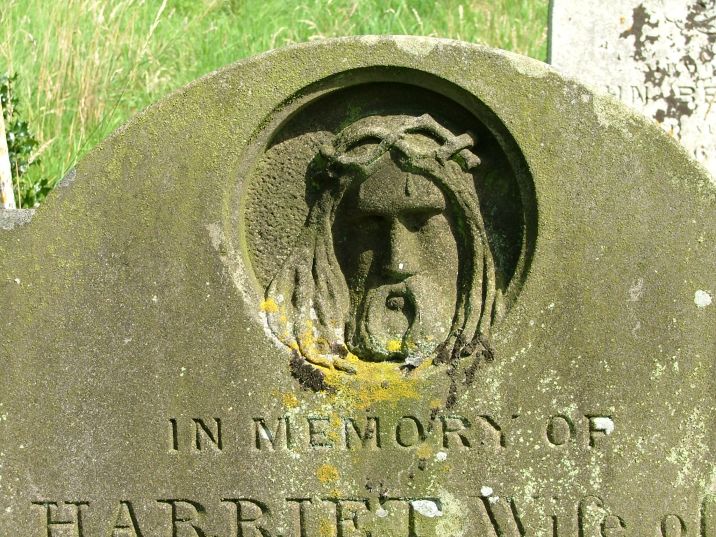
wander, and there are several interesting 18th
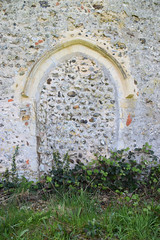
and 19th century headstones. The church is small,
and has two curious filled-in archways, one on
each side, halfway down the nave. It seems there
were once transept chapels, or even perhaps this
church was cruciform, except that the roofline
must have been very low. There was a fairly
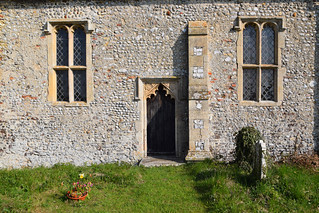
restrained 19th century restoration, which has
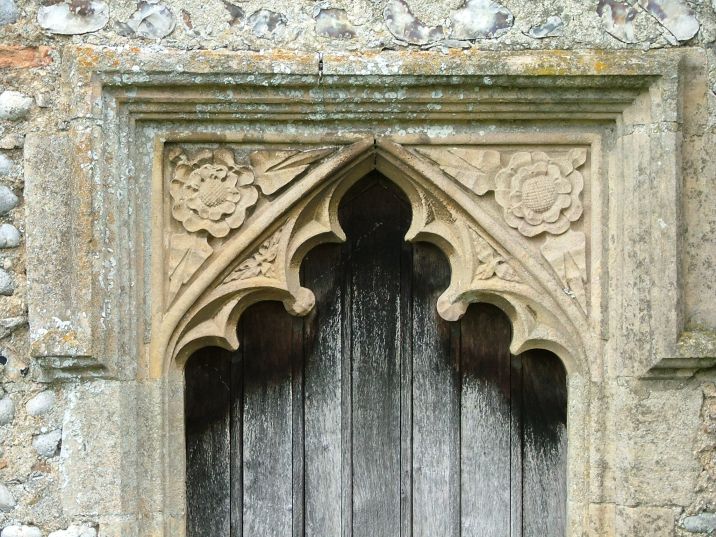
left the curiosity of a terracotta carved and
cusped archway to the priest door of the chancel.
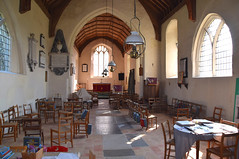
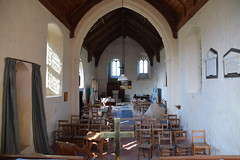
Inside, the Victorian
benches have been replaced by modern chairs, and
I think this always looks good in a medieval
church. There is a plainness that offsets the
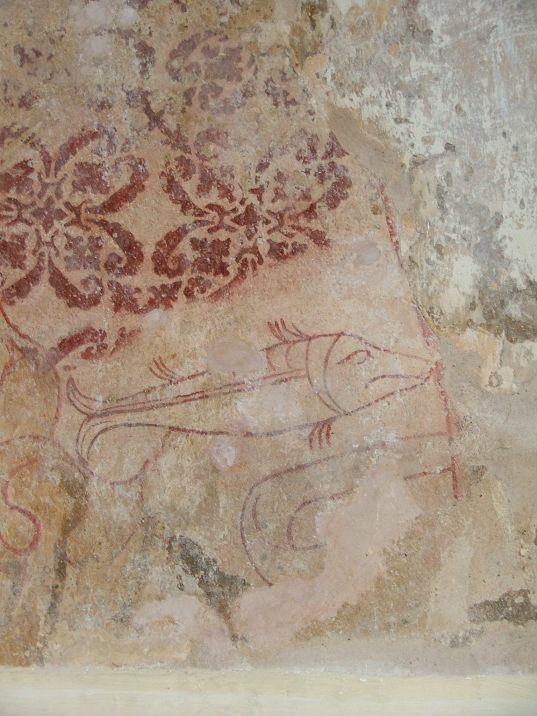
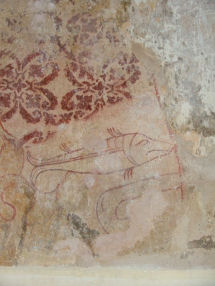
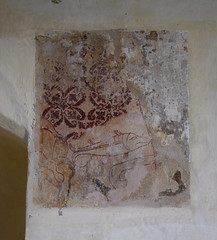
medieval survivals nicely - notably, the lower
part of a St Christopher wall painting, the fish
still swimming about oblivious of the passing of
time.
|
| There is a plain font
reset on a pillar which is rather too wide for
it. The whole piece is characterful. There is a
gorgeous little piscina, with delicate carvings
in the spandrils of the arch. Little things that
please, and the simplicity of the Sarum-screened
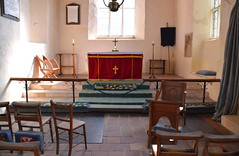
altar is pleasing too. There is a real feeling
that this is a church of the common people, a
building that has overseen the quiet lives of
generations of ordinary Oultoners. |
|
|
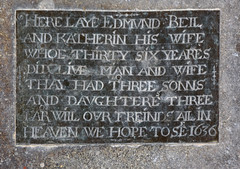
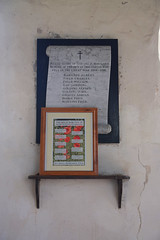
A moving testament to the people of
the past is a brass plate set below the chancel arch. It
dates from 1636, right on the eve of the Commonwealth,
and records that:
HERE LAYE EDMUND BELL AND
KATHERIN HIS WIFE
WHOD THIRTY SIX YEARES DID LIVE MAN AND WIFE
THEY HAD THREE SONNS AND DAUGHTERES THREE
FARWILL OUR FREINDS ALL IN HEAVEN WE HOPE TO SEEThe
inscription is harshly carved, and although the
sentiment is touching, you might imagine from
their poorly-spelt little ditty that the Bells
were rural oafs from the outback. In fact, they
were people of consequence - Edmund's grandfather
had been Speaker of the House of Commons under
Elizabeth I. Further, this crude memorial was
produced at a time when the Renaissance was in
full flower in continental Europe. A telling
reminder of the price the English paid for
Puritanism, and the protestant tradition would
continue to hold strong in this backwater over
the next century and more, as witnessed by the congregational chapel of 1728 in
the narrow lanes to the north-west.
|
|
 |
Simon Knott, December 2017
|
|
|