| |
|
Octagon
Chapel, Norwich If the Old Meeting House next door is noted
for its quiet reserve, a promised land of a building
established after years of exile and patient organising,
the Octagon Chapel arrived on Colegate with a bit more of
a splash. The site had been home to a Presbyterian chapel
since the late 1680s, a bit of a comedown for that
denomination, considering that it had so nearly become
the Church of England during the Commonwealth. But the
Presbyterians fell between two stools, for they wanted to
keep the organisation of a national church, which
offended the congregationalists, but they rejected
notions of bishops and sacraments, which appalled the
Anglicans. No wonder both groups were glad to see the
back of them after the Act of Toleration.
However, the Presbyterians thrived in this fashionable,
hardworking area, and in 1756 they pulled down their old
workaday chapel and erected this sensational building.
Perfectly octagonal, so that no corners are more distant
from the pulpit, it echoes the continental oratories
which were themselves probably inspired by early
protestant churches in the Low Countries. A portico
fronts the main entrance, and ranges of arched windows
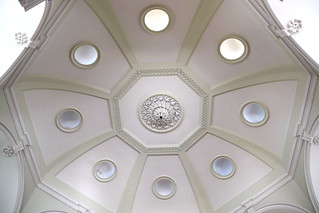
above fill the interior with light, as do circular
dormers in the roof. The effect is wholly splendid, and
it was the first of its kind in England.
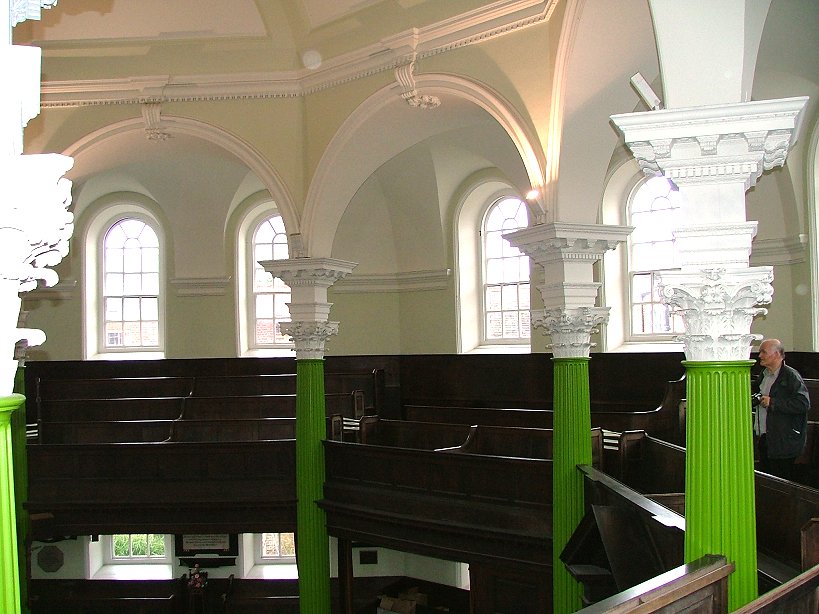
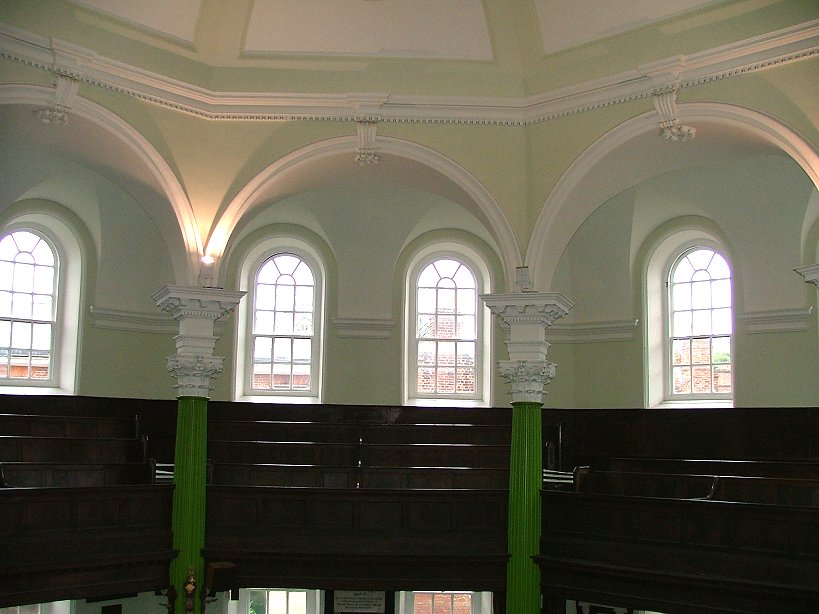
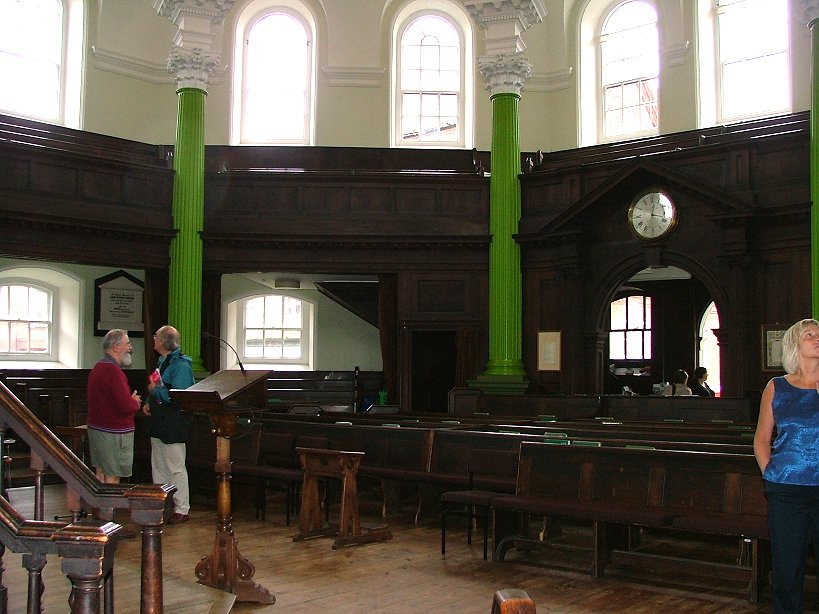
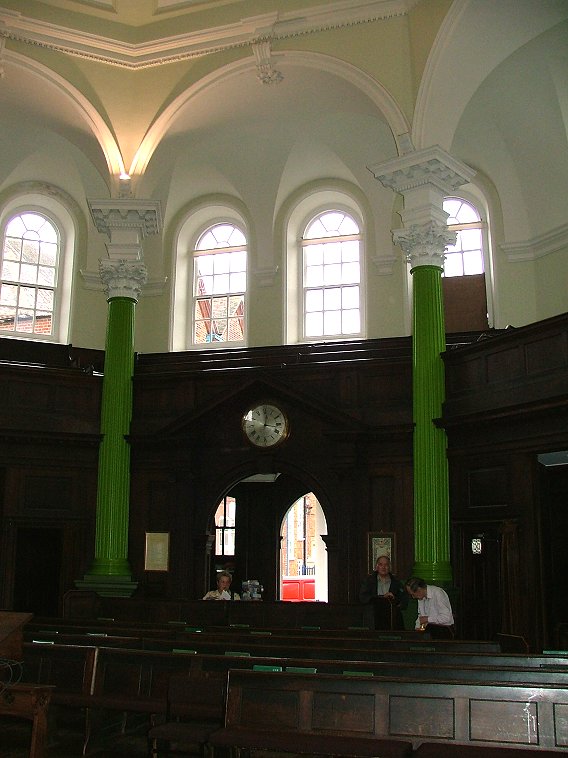
If the exterior is striking, the inside is doubly so. You
enter an arena of dark wood and cream walls, the
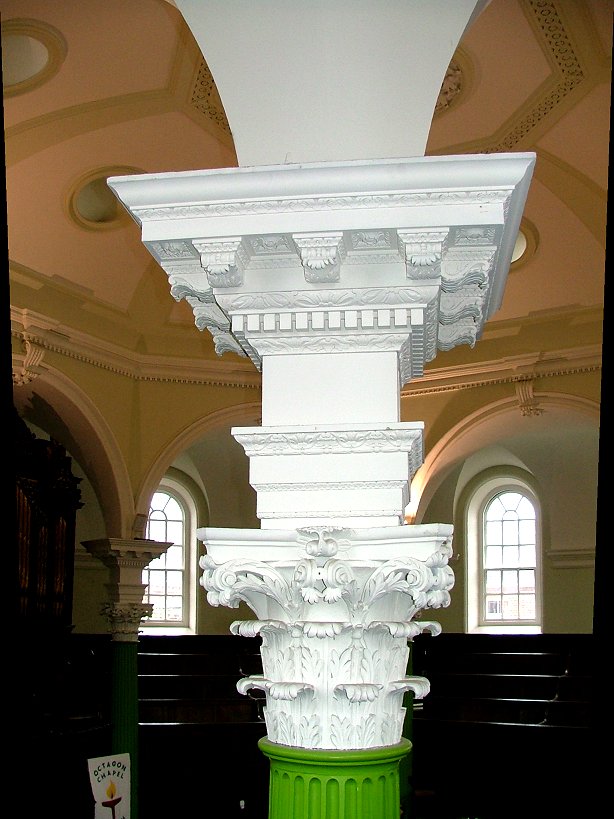
shell-like dome of the roof lifted by vivid green fluted
pillars that support elaborate Corinthian capitals. There
is nothing else quite like it in East Anglia. We might
well be in Scotland here, in the Kirk of a prosperous
18th century town. The upper part of the interior is so
light that you might be underwater on the floor below,
and climbing the stairs into the balcony is like coming
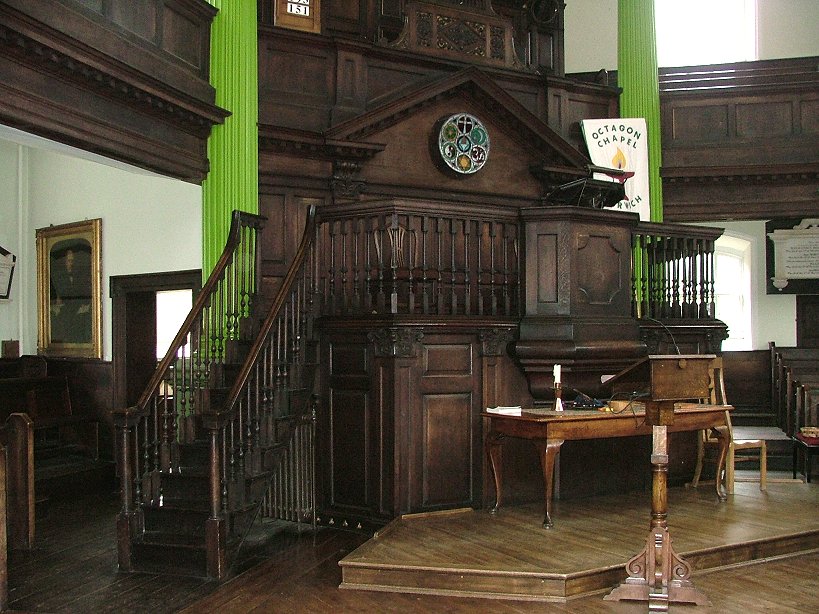
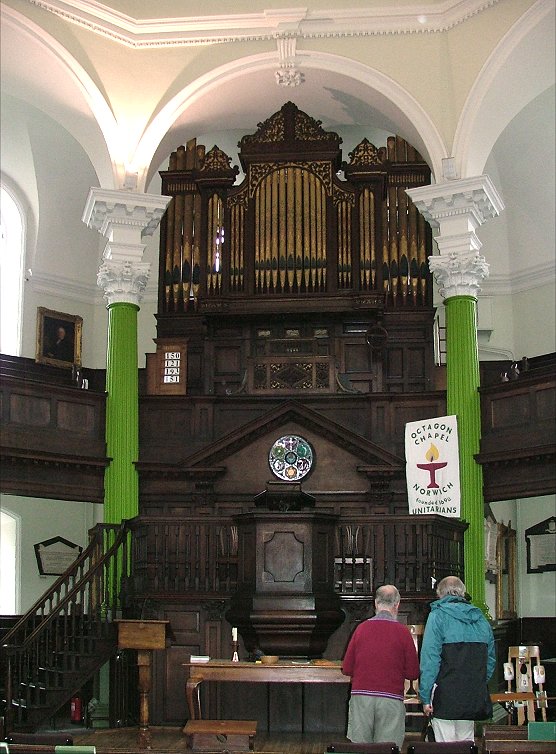
up for air. Upstairs or downstairs, everything focuses on
the magnificent pulpit and holy table. Surmounting
everything is the great organ.
The architect was Thomas Ivory, one of several
fashionable architects who tendered for the job. It seems
that he used some of the ideas of one of his rivals,
James Gibbs, architect of the Radcliffe Camera in Oxford.
Influential members of the congregation at the time
included the Martineaus, who gravitated here with other
former members of the French and Dutch protestant
churches as they became assimilated into Norwich civic
life.
But history was not on their side. Presbyterianism had no
real hold on the English imagination. Except in big
industrial cities and areas close to Scottish influence,
it quickly transmuted into other theologies. Their rump
was absorbed into the new United Reformed Church in the
1960s. But the congregation here at the Octagon chapel
had embraced Unitarianism by the early 19th century, and
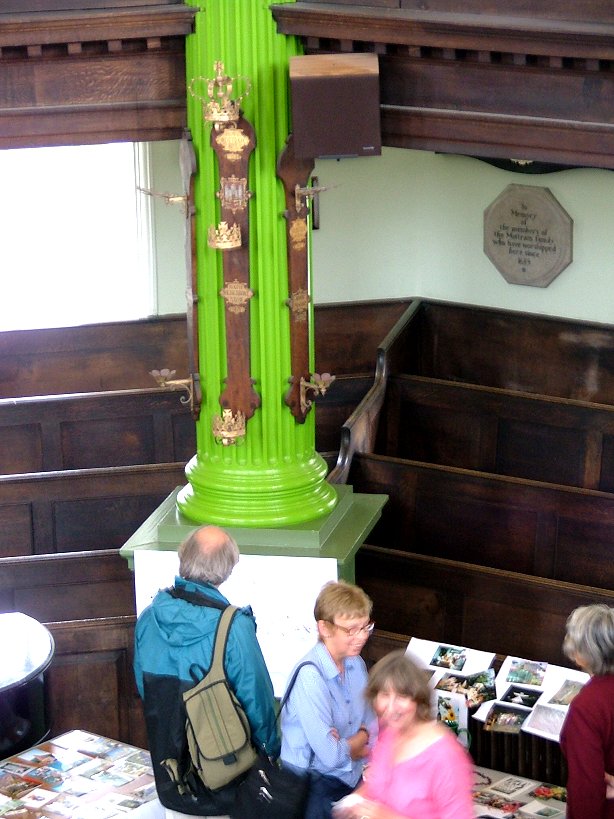
the chapel remains in the care of Unitarians today. That
they have continued to be part of mainstream civic life
is indicated by the mayoral sword and mace rests which
are fixed to one of the pillars. Their beautiful building
is an adornment to a city that has so often been
accepting of strangers and their energy.
Simon Knott, January 2020
Follow these journeys as they happen at Last Of England
Twitter.
|
|
|