home I index I latest I glossary I introductions I e-mail I about this site
St George Tombland, Norwich
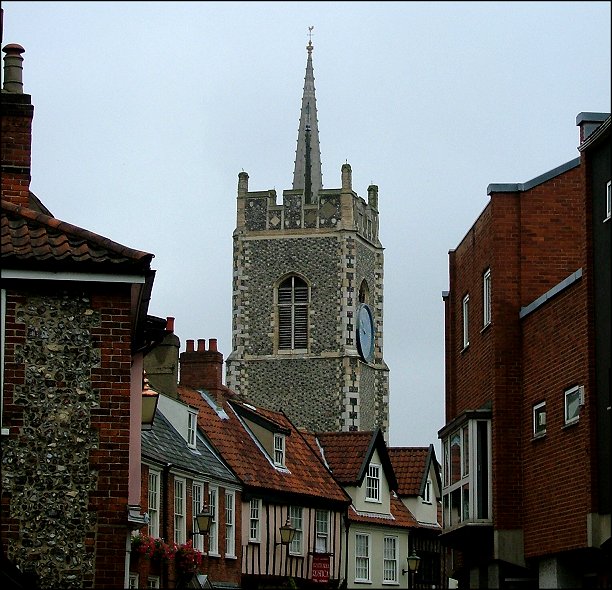
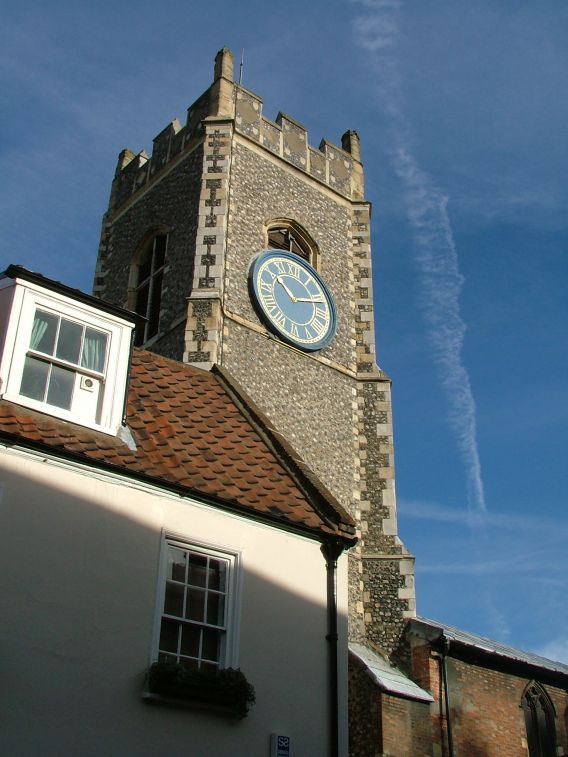
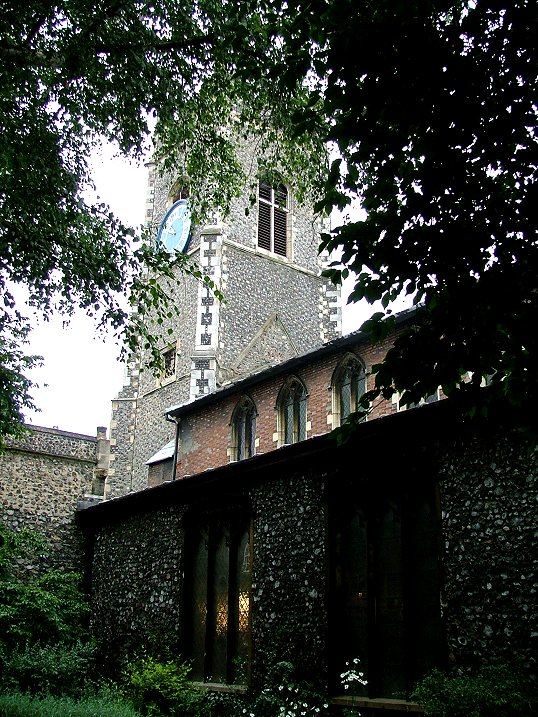
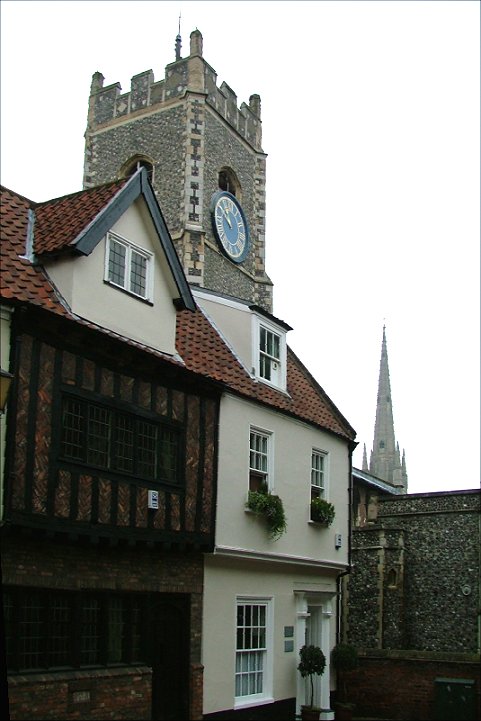
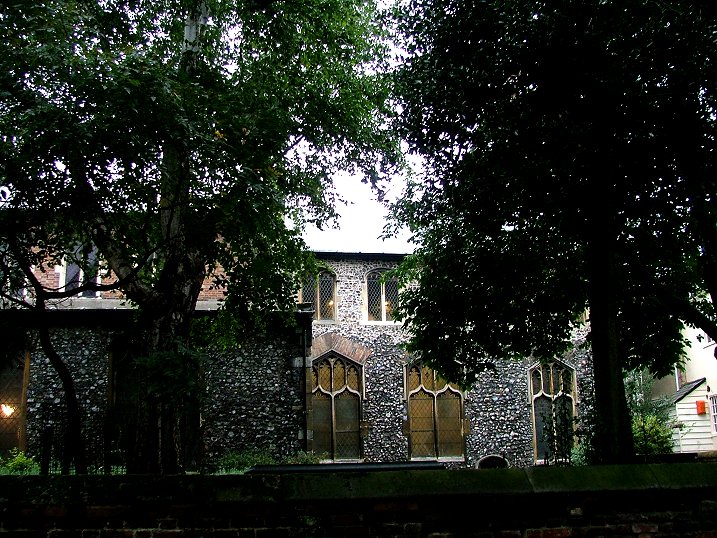
St George
Tombland, Norwich
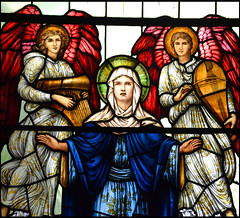
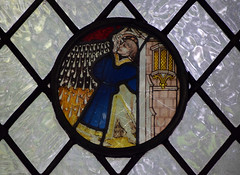
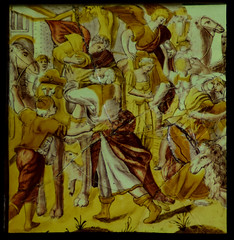
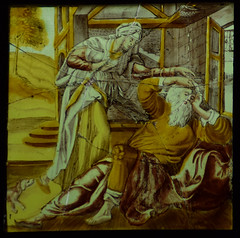
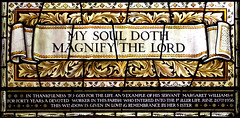
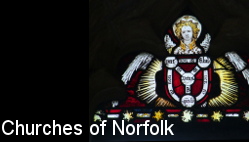
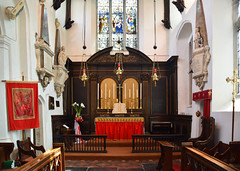
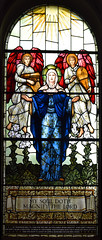
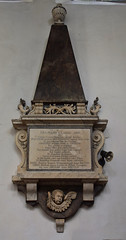
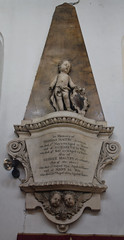
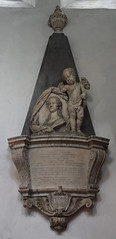
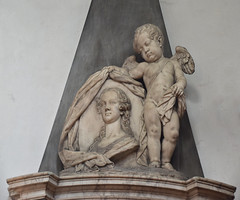
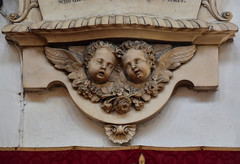
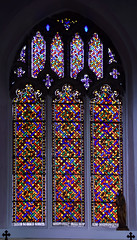
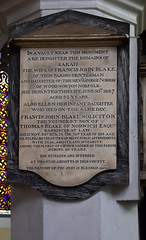
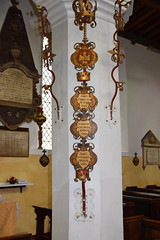
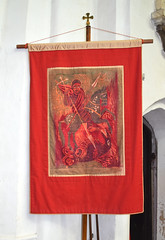
Also 18th century is the pulpit with its high tester, both elegant and awe-inspiring. The font cover is a hundred years earlier, the St George and the dragon motif on its top a hundred years later. The font itself is an arcaded job in Purbeck marble, familiar from hundreds of rural East Anglian churches. This one has been urbanised by enthusiastic Victorians, placed on grand marble pillars. Despite being a small church in a small parish, St George has provided its fair share of mayors, and in common with many other city churches retains its sword and mace holders in the north aisle, decorated with some of their names. There is also a good range of fairly impressive memorials. But perhaps the best features are in glass, five centuries apart. At the east end of the south aisle is a lovely window of 1937, a late work of the William Morris workshop depicting the Blessed Virgin at the Magnificat flanked by angel musicians. The artist was WH Knight, the angels drawn from Burne Jones cartoons. You can see a detail from it at the start of this piece. Further west in the same aisle there is a 16th Century roundel from a domestic Labours of the Months sequence. It depicts April, the rich man impatiently dodging the rain that prevents him getting on with his farming. Across the church, high up in the north aisle, are two Flemish panels depicting scenes from the story of Tobit.
St George has two notable early 17th century memorials. Up in the chancel is the marvellously named Alderman Anguish. His monument is by Nicholas Stone. It is highly coloured, and he kneels opposite his wife, their family living and dead around them. Another former mayor is remembered at the west end. John Symonds died in 1609, and left unto the poore of this parish two shillings a week to be continued forever. Well, ten pence won't go far these days, but if you are one of the Tombland poor you might consider looking on the shelf below it, for this is the original dole table on which charity payments may be made.
Simon Knott, March 2018 |
Amazon commission helps cover the running costs of this site.
home I index I latest I introductions I e-mail I about
this site I glossary
Norwich I ruined churches I desktop backgrounds I round tower churches
links I small
print I www.simonknott.co.uk I www.suffolkchurches.co.uk