home I index I latest I glossary I introductions I e-mail I about this site
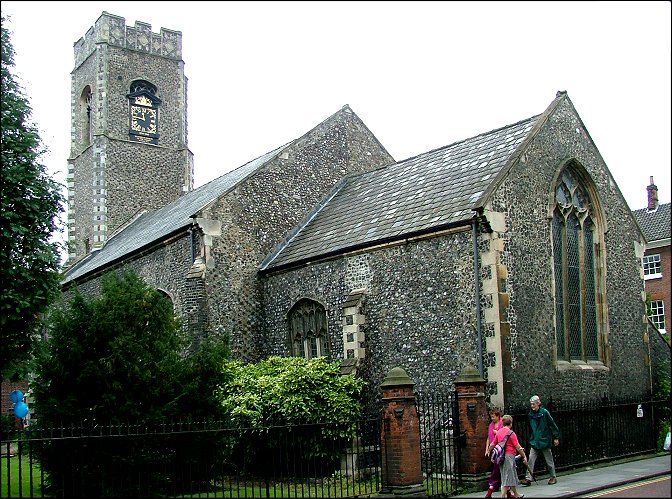
St Clement Colegate, Norwich
St
Clement Colegate, Norwich
St
Clement's future was secured after redundancy in curious
circumstances. The lease was taken on by Jack Burton, a
local Methodist minister, on behalf of the Norwich
Transport Workers trade union, partly with the intention
of its use as a chapel. Because of this, all the internal
furnishings were retained. These, dating from the 19th
century, were from a time when St Clement's congregation
was almost wholly drawn from the local tenements and
slums that housed industrial workers, so this was
entirely appropriate. As it turned out, one man's
obsession had been a lifeline, and despite a later arson
attack, this was for many years the only one of Norwich's
redundant churches that was freely open to the public for
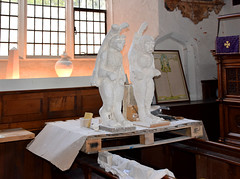
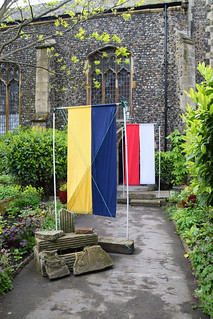
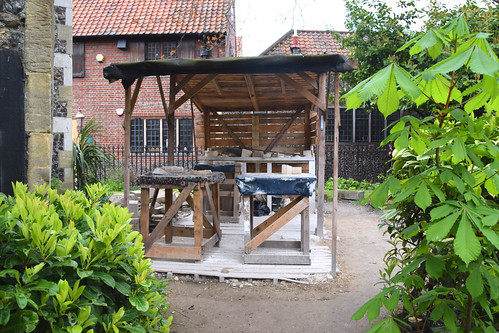
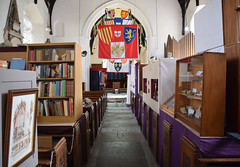
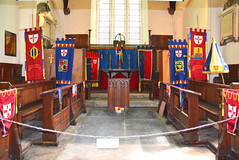
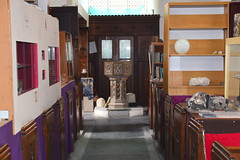
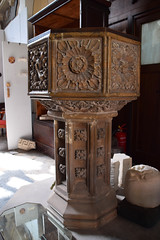
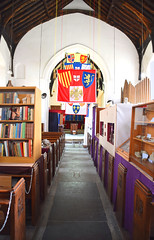
private prayer every day. Our Master Mason is a City of London trained mason; an international Guild Master (formerly Master at Windsor Castle, Stoneleigh Abbey etc) and is one of the world's leading craftsmen. His guild - the European Guild of Master Masons - was founded in 1096 and has been in continuous existence ever since (being European in scope they survived intact by moving around when conditions - English Reformation/French Revolution etc - required it). There are only twelve Guild Masters in the world. Upon re-founding a craft guild in Norwich, in recognition of his immense contribution to St Clement, we asked the Reverend Jack Burton to be our Prime Warden - a request he duly accepted. Being a guild in livery we undertake quarterly processions and perform our Mystery Play - Cain and Abel - in the city during Corpus Christi. We also have an Artist in Residence working with us and a guild storyteller - the 'Gleeman'. Coming back in May 2017, I stepped through the stonemasons' yard, past guild banners, into the church through the south porch. It was a good twelve years since my last visit, but it was clear that the interior had undergone a great transformation. The church is full of colour, guild banners hanging from the roof and around the walls. The west end of the nave has become the masons' study area, arrayed with display cases showing examples of different stones and techniques, as well as stacks of books. Beyond to the east is a design working area. The chancel is maintained as the guild chapel. The furnishings and font remain in situ. The font is an early 16th century one, with that proto-renaissance styling that makes us wonder how artistic endeavour might have flowered if the Reformation had not intervened.
Simon Knott, January 2018 |
Amazon commission helps cover the running costs of this site.
home I index I latest I introductions I e-mail I about
this site I glossary
Norwich I ruined churches I desktop backgrounds I round tower churches
links I small
print I www.simonknott.co.uk I www.suffolkchurches.co.uk