home I index I latest I glossary I introductions I e-mail I about this site
St Alban, Lakenham, Norwich


Follow these journeys as they happen at Last Of England Twitter.
| St Alban,
Lakenham, Norwich St Alban,
in the well-to-do suburb of Lakenham to the south of the
city centre, is perhaps the most successful of the
Anglican churches built between the wars in Norwich, if
not as spectacular as St Catherine at Mile Cross. The
architect was Cecil Upcher, perhaps best known in the
city for saving and restoring Pulls Ferry and the Ferry
House, where he lived and worked. The style is curious,
an amalgam of ideas that creates its own unity. There are
Norman motifs without it being neo-Norman, and Early
English details that do not combine to give an overall
effect. There are perhaps the last whispers of art deco
as it leaves the room for good (imagine it as a bakelite
model, and there you are), and the blind chancel is
typical of its decade, the Thirties. Pevsner considered
it in the Maufe succession, perhaps identifying
a nod to Guildford Cathedral, begun the same decade. Ian
Nairn thought that Maufe was a man with genuine
spatial gifts but out of sympathy with the style of his
time, but I do not think the same can be said of
Upcher.
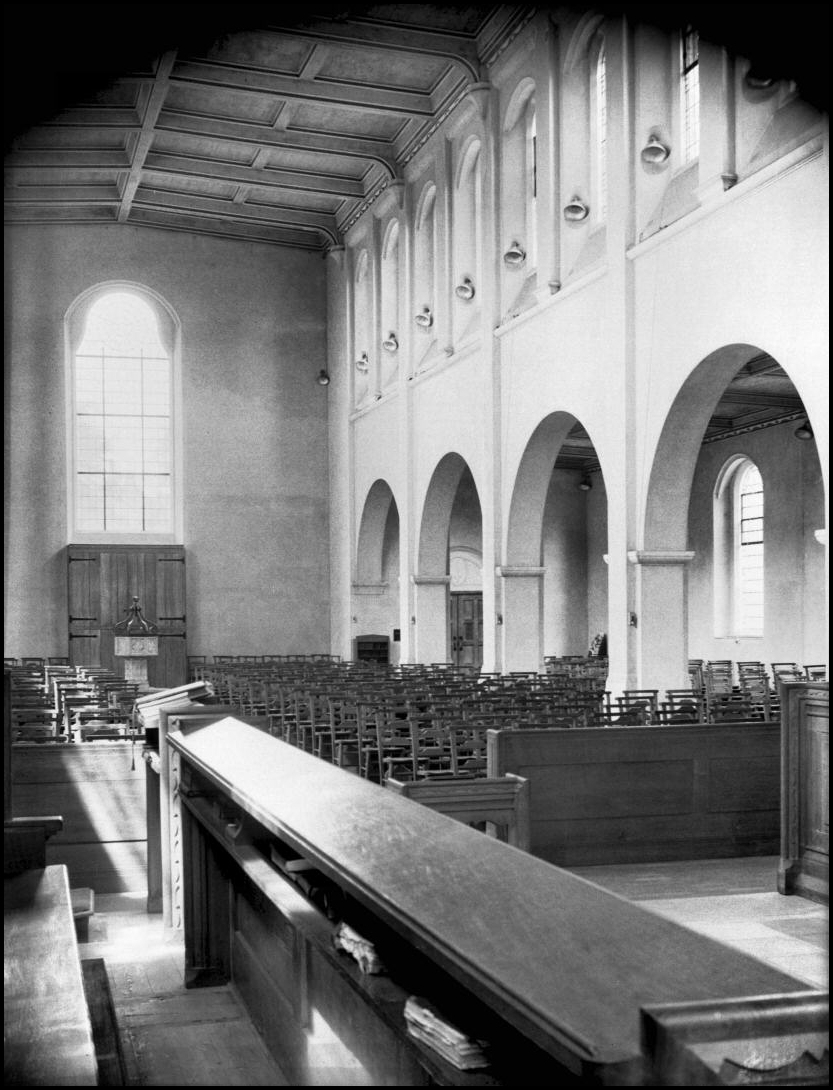
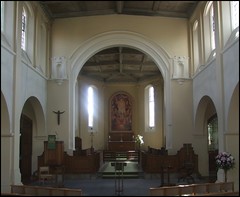
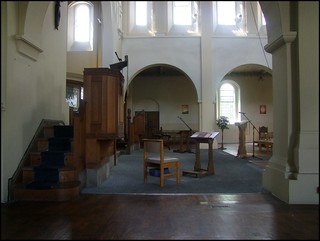
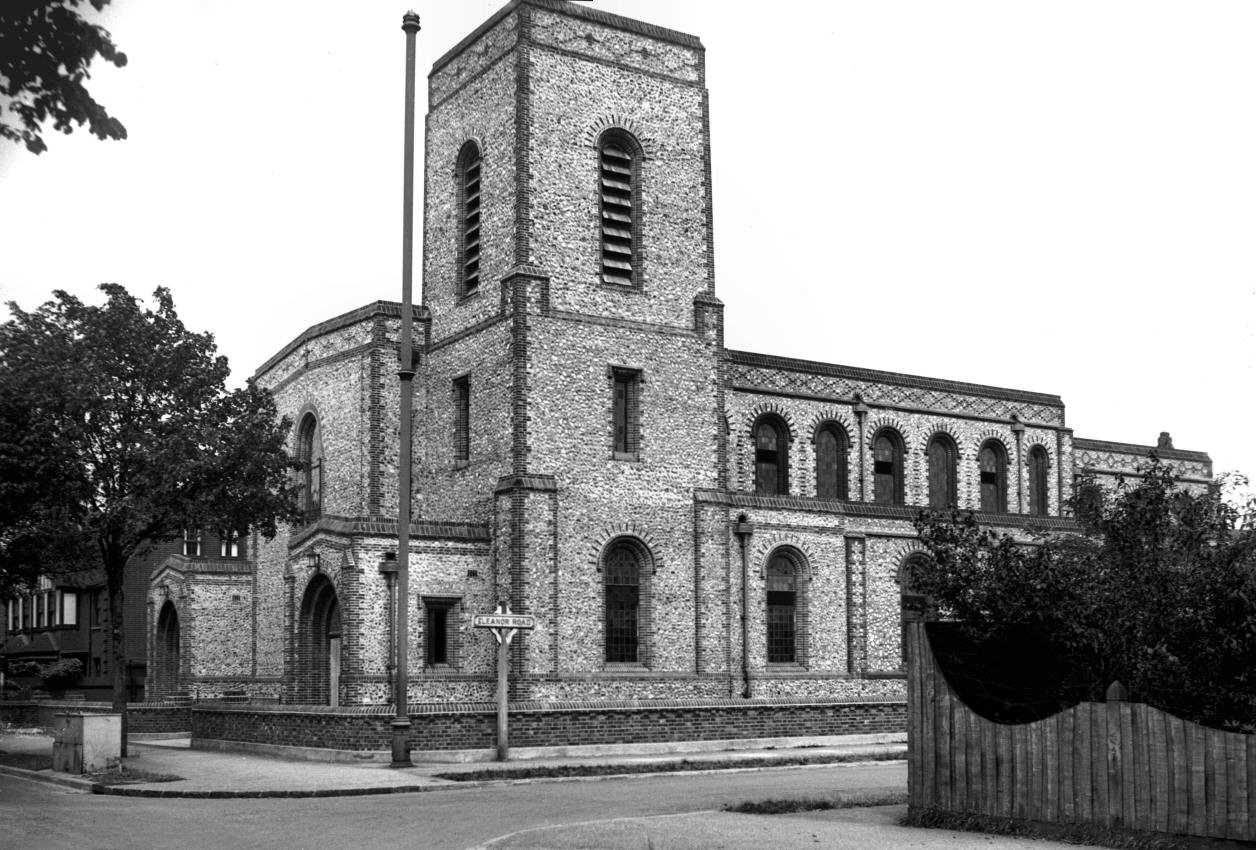
I first visited St Alban back in 2009, more than seventy years after its completion, but unlike many other city churches the original urban context here remains almost entirely unchanged, the polite Edwardian houses around still the setting that Upcher planned for and Plunkett recorded. On that occasion I stepped through the west porch into an interior which was full of light, for there is no coloured glass at all here. Again, and despite the exterior, there is a feel of the Classical, perhaps not intentional at the time, but the white walls and serious arcades are a reminder of the influence of that genre on Modernism. Blot out the clerestory, and we might easily be in part of Basil Spence's University of Sussex. The wooden chairs photographed by Plunkett had gone to be replaced rather uneasily by modern cushioned ones, although generally the clearing of clutter had done the building a service (and would continue to do so, as we will see). Above the clerestory rides a beautiful panelled roof, slightly canted and looking for all the world as if it has come here from an 18th Century country house. St Alban contains one interesting
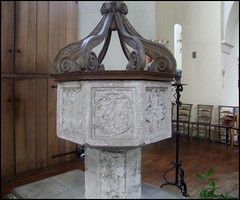
medieval survival. This is the 14th Century font which
came from Knettishall, just over the Suffolk border. The
parish church of Knettishall, which has always been in
the Norwich Diocese, suffered abandonment in the early
decades of the 20th Century, and in 1933 its furnishings
were dispersed, mostly to Riddlesworth church on the
Norfolk side of the border, but the font came here. It
was a happy coincidence that St Alban happened to be the
only church in the diocese under construction at the
time. The font cover is Jacobean, did it also come from
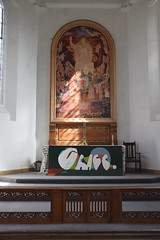
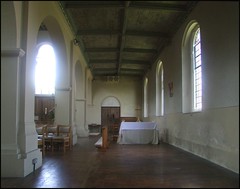
Knettishall? When I first came here the parish mid-week Eucharist was in progress, and I observed in these pages at the time that the High Church end of the Church of England in Norwich appeared to still be hale and hearty. But coming back in 2019, everything had changed. The church has been cleared of most of its furnishings, and the south aisle and western part of the nave have been converted into a Christian café. The north aisle appeared to be in use for art workshops of one kind and another with only the chancel retaining its previous fixtures and fittings. The people in charge (all much younger than me) were very friendly and welcoming (as, indeed, I had found their elders twelve years earlier) though they did find it a little odd that I only wanted to photograph their church and didn't want to sit down and talk. I thought the empty nave suited Upcher's vision, the white walls and rolling arcades remaining a slightly severe witness. The best of the original furnishings have survived. These are the twin pulpit and lectern from which prayer desks and then choir stalls turn back into the chancel, typical of their decade, if not as spectacular as the same thing in inlaid polished walnut at the exact contemporary All Hallows, Ipswich. You can see a mixture of before and after images below. Simon Knott, July 2021 Follow these journeys as they happen at Last Of England Twitter. You can see thousands of George Plunkett's other old photographs of Norwich on the Plunkett website. |






|
|||||||||||||||||||||||||||||||||||||||||||||||||||||||
|
|||||||||||||||||||||||||||||||||||||||||||||||||||||||
home I index I latest I introductions I e-mail I about
this site I glossary
Norwich I ruined churches I desktop backgrounds I round tower churches
links I small
print I www.simonknott.co.uk I www.suffolkchurches.co.uk
![St Alban's Lakenham interior view east [2499] 1938-06-25.jpg](St%20Alban's%20Lakenham%20interior%20view%20east%20[2499]%201938-06-25a.jpg)