home I index I latest I glossary I introductions I e-mail I about this site
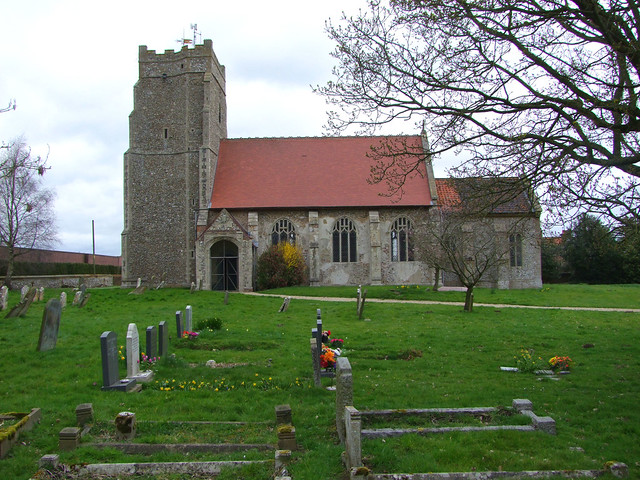
St Peter, Longham
Follow these journeys as they happen at Last Of England Twitter.
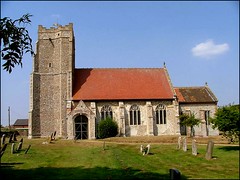
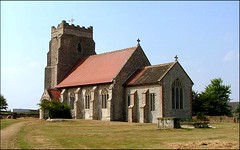
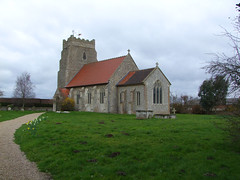
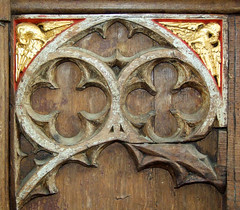
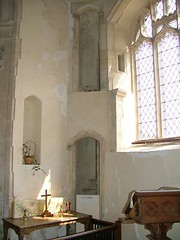
St Peter, Longham This crisp, pleasing building sits a good mile away from its busy village, with only the former Hall for company. It isn't quite out in the wilds, because the busy Beeston to Gressenhall road runs nearby, and there is a fairly large commercial farm beside it, but the setting is grand, if a little austere. It probably looked better before the lawnmower enthusiasts carted the old gravestones away. The tower is a curious shape. The top stage was removed as unsafe in the 18th Century, and there is a wide wall buttress to the east. This creates a sense of squatness which is not unpleasing, especially as a jolly counterbalance to the severely straight-faced chancel of the 1860s. The brick and flint looks as if it was the product of a computer simulation, it is so regular. I'm not sure who the architect was, but I am sure that he could not have been responsible for the porch, which is pleasingly ramshackle and looks as if it is made up of masonry from several different sources. A memorial stone in the entrance remembers the botanical artist Sarah Drake and the author Frances Wilding is also remembered in the churchyard. Mortlock describes the interior as modest, which is about right. It is not without character, the screen is very pretty, and if the paintwork is almost entirely modern it is still done very well. The rood loft stairs are cut into the south wall in an interesting way, built up to form the window enbrasure with a light that lets out into the splay. There's a large image niche in the east wall of the nave beside it. When I first visited this church back in 2006 it was my 600th Norfolk church. My companion on that occasion suggested that somewhere grander might have been more fitting, but I liked the way that St Peter was just another church, modest and yet purposeful. Simon Knott, November 2020 Follow these journeys as they happen at Last Of England Twitter. |





|
|||||||||||||||||||||||||||||||||||||||||||||||||||||||
|
|||||||||||||||||||||||||||||||||||||||||||||||||||||||
home I index I latest I introductions I e-mail I about
this site I glossary
Norwich I ruined churches I desktop backgrounds I round tower churches
links I small
print I www.simonknott.co.uk I www.suffolkchurches.co.uk