home I index I latest I glossary I introductions I e-mail I about this site
Chapel of the Guild of St Michael and the Holy Souls, Little Walsingham

Follow these journeys as they happen at Last Of England Twitter.
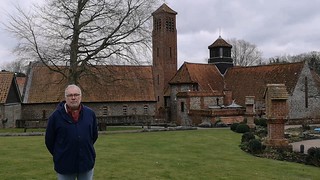
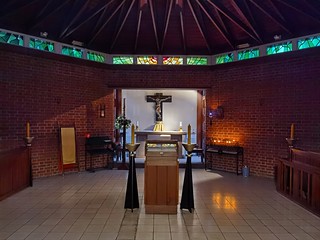
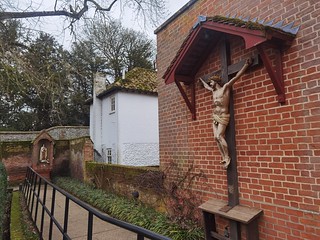
Chapel of the Guild of St Michael and the Holy Souls, Little Walsingham This lovely little chantry chapel
is hidden away in the gardens of the Anglican shrine, and
is probably the least visited of all the churches in the
Walsingham orbit. It was built in 1965 for the Anglican
Guild of St Michael and the Holy Souls. The architect was
Laurence King who had been responsible for the
restoration of the parish church after the 1961 fire. The
Guild had been formed by members of the Anglo-Catholic
movement in 1873 to carry out a task that had been
abandoned by the Church of England at the Reformation,
the saying of prayers for the dead. This activity had
been circumscribed by the Anglican reformers in the 16th
Century, because it presupposed the existence of
purgatory. This was anathema to the reformed faith. But
as the Anglican church rediscovered its Catholic roots in
the exciting middle decades of the 19th Century, there
were those who sought to restore to life this aspect of
pre-Reformation worship, which had been at the heart of
much private devotion in the late medieval period.
Indeed, it had been the need to ensure that prayers were
said for the dead which had led to the renewal and
rebuilding of many East Anglian churches in the 15th and
early 16th Centuries, as wills and bequests gave money in
return for those prayers. This new urgency had mostly
been a result of the experience of the pestilences in the
14th Century which carried off perhaps half the
population, and broke up the old land ownership patterns.
The new moneyed class needed prayers for their souls, and
chantry priests to say those prayers. But this all came
to an end in the 1540s and 1550s. Simon Knott, February 2023 Follow these journeys as they happen at Last Of England Twitter.
|
|
|||||||||||||||||||||||||||||||||||||||||||||||||||||||
home I index I latest I introductions I e-mail I about this site I glossary
links I small
print I www.simonknott.co.uk I www.suffolkchurches.co.uk
ruined churches I desktop backgrounds I round tower churches