home I index I latest I glossary I introductions I e-mail I about this site
St Margaret, Kirstead

Follow these journeys as they happen at Last Of England Twitter.
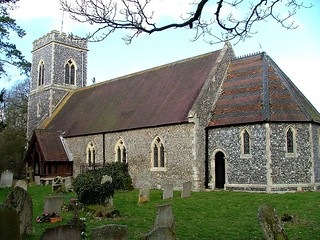
St Margaret, Kirstead I came back to Kirstead on a
beautiful day in the spring of 2022, and I was surprised
to notice afterwards that my previous visit had been on
exactly the same day in 2006. But that had been a raw
March day of sub-zero temperatures, when this had felt a
bleak and remote spot. The skeletal trees shivered in the
icy gusts, and St Margaret's narrow nave huddled behind
the stark tower as if sheltering from the blast. By
contrast, now there was a sense of the world reawakening
from the sleep of winter, birds singing and the first
spring flowers raising their curious heads. There was,
I'm afraid, another difference, for Kirstead church was
now kept locked. The notice board in the porch suggested
that it would be opening again in the summer months, but
for now the photographs at the bottom of this page are
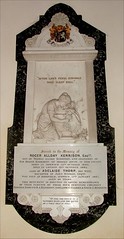
from that visit in 2006. The most memorable feature of St Margaret is perhap the range of high quality memorials to members of the Kerrison family. The best of them is immediately beside the south doorway to Roger Allday Kerrison and his wife Adelaide Thorp, which depicts a weeping woman scattering roses on an urn and the inscription After Life's Fitful Struggle They Sleep Well. The church retains the set of bibles and prayerbooks given at the time of its rebuilding, and these help to retain the special atmosphere of a Victorian rural church. You can almost sense the blacksmith and the ploughboy sitting in their smocks on the benches, listening to the Word. Simon Knott, December 2022 Follow these journeys as they happen at Last Of England Twitter.
|
|
|||||||||||||||||||||||||||||||||||||||||||||||||||||||
home I index I latest I introductions I e-mail I about
this site I glossary
Norwich I ruined churches I desktop backgrounds I round tower churches
links I small
print I www.simonknott.co.uk I www.suffolkchurches.co.uk