home I index I latest I glossary I introductions I e-mail I about this site
St Mary, Kelling

Follow these journeys as they happen at Last Of England Twitter.
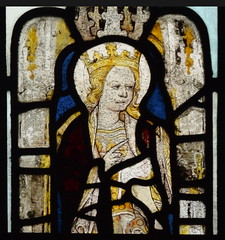
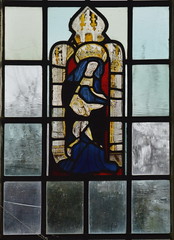
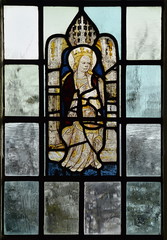
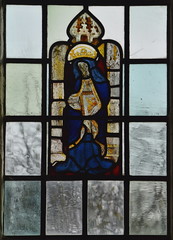
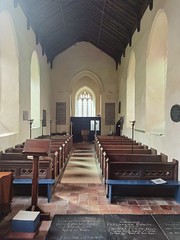
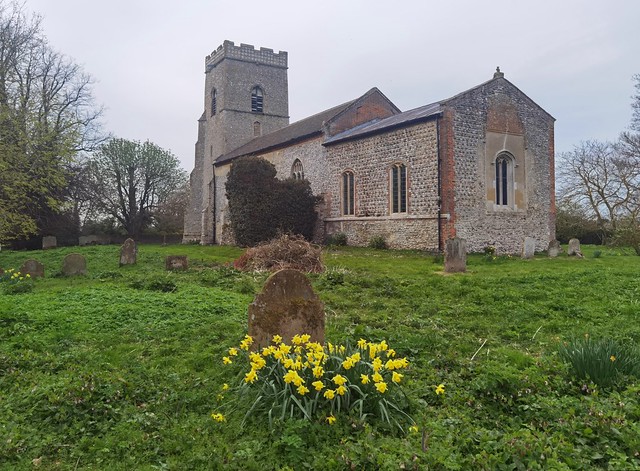
St Mary, Kelling If you were to listen to Noel Coward you would be in for a surprise on this part of the coast, for it is not very flat, Norfolk here at all. A long, wide heathland runs from west to east just behind the busy seaside towns of Sheringham and Cromer and the assorted straggling parishes that connect them. Beacon Hill in the parish of West Runton is the highest point in the whole of the county of Norfolk, although it must also be said that Norfolk has the lowest highest point of any English county. All the same, it will be memorable to anyone who has cycled up the road that runs to the south of West Runton. To the west of Sheringham the landscape undulates, and the high heathlands of the Kelling Estate are a lonely place of woodlands and scrub. There is a small village of Kelling down on the road between Salthouse and Weybourne, but the parish church is a mile to the south on the edge of Kelling Heath beside the Hall, which makes it seem an isolated spot and, I think, likely to be one of Norfolk's less frequently visited churches. The current Hall was built on the eve of the First World War by Edward Maufe for Sir Henri Deterding, the fabulously wealthy chairman of the Royal Dutch Shell Oil company. The church sits on a rise above the lane, its west tower facing you as you approach making it seem more blockish and austere than it really is. It is all pretty much of the same date save for some later restorations, roughly the second half of the 15th Century, although it must be said that it is Perpendicular in the letter rather than in the spirit, for this is a small church without aisles or clerestories. The thickness of the walls suggests that the Norman predecessor was built on to rather than entirely replaced, and there is a curiosity about it inside, as we will see. The size of the church is emphasised by a wide, sprawling churchyard with not as many headstones as you might expect, but it is pleasantly maintained as a nature conservation area. There is a transept on the north side, and at one time there was a south transept, which is to say that this was a cruciform church, unusual for this part of Norfolk. All that remains of the south transept are some lengths of ruined walls. Altogether the church has a lot of character, a little out of the ordinary as you view it from the outside. Gardens of the Hall abut it, giving it a secretive, proprietorial feel. You step through a funny little porch through a doorway in the 14th Century style, although it might easily be a rustic revival from the later campaign, and into a building which is at one with its exterior, with brick floors, plain wood furnishings and old stone. The rugged font of about 1500 seems to grow organically from the west end of the nave. It has a dedicatory inscription to William and Beatrice Kelling, unusually around the bowl rather than the stem, and one of the panels depicts a particularly fine set of the Instruments of the Passion. Further east, there are three roughly contemporary late 15th Century glass figures of female saints reset in clear glass in a south nave window. Two of them appear to be nuns wearing crowns, in which case one might be St Etheldreda. The figure between them also wears a crown, has loose hair and is seated on a throne. She points a finger, suggesting that she is indicating her now-lost symbol. She may even be the Blessed Virgin, and she once had the infant Christ on her lap.
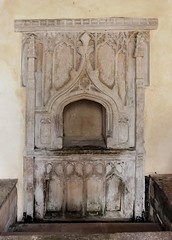
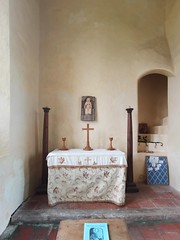
Opposite these figures, which are set in the ghost of the entrance to the south transept, there is a pretty screen running across the north transept which makes of it a simple yet devotional lady chapel. On the west wall of the transept is a delightful mural, with the Blessed Virgin and St Francis in niches flanking a view of the local marshes. The former rood loft stairs turn up from the transept, and seem remarkably wide for such a little church. The chancel arch they turn into is curious, for it is deeply cut, pointed and narrow. Either side of it there is a puzzle, for the two eastern corners of the nave are braced with what appear to be thick buttresses, designed to carry a weight. Do they mean that the original Norman church had a central tower? Beyond, the chancel is darker, its
tiny two-light east window quite a contrast to what you
might expect from the Perpendicular even in a smaller
church. The outline of the window it replaced is clear
from the outside, and Pevsner says it was inserted as
part of the 1888 restoration. There was another major
restoration of the chancel in the 1960s. Here in the
chancel is Kelling's greatest treasure, a sumptuous late
15th Century Easter Sepulchre, an exquisite thing which
along with the font gives a probable date for the
completion of the church. Its lower portion was for many
years hidden by the raised floor of the 19th Century
restoration, but in recent years the area around it has
been lowered, and you can see it in all its glory. Simon Knott, April 2022 Follow these journeys as they happen at Last Of England Twitter.
|
|
|||||||||||||||||||||||||||||||||||||||||||||||||||||||
home I index I latest I introductions I e-mail I about
this site I glossary
Norwich I ruined churches I desktop backgrounds I round tower churches
links I small
print I www.simonknott.co.uk I www.suffolkchurches.co.uk