home I index I latest I glossary I introductions I e-mail I about this site
All Saints, Intwood


Follow these journeys as they happen at Last Of England Twitter.
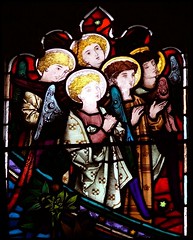
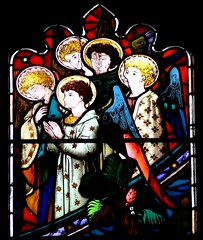
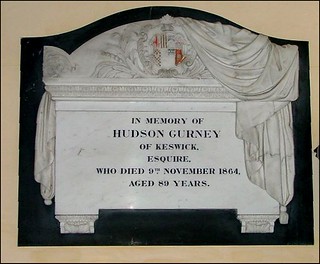
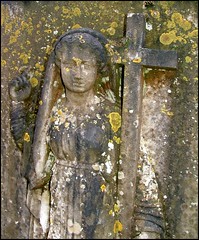
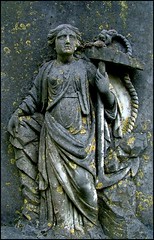
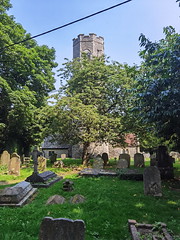
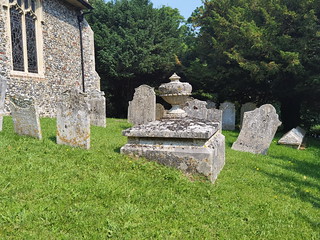
All Saints, Intwood The southern fringe of the city of Norwich can seem as rural and remote as anywhere in the county. Intwood church, just beyond the suburbia of Eaton and Cringleford, stands above a deep-set meeting of lanes, with the great 19th Century pile of Intwood Hall behind it. You climb up the steep path into the churchyard, where the illusion of remoteness is spoiled by the noise from the A47 which runs through about a hundred yards to the north. The round tower appears over-tall against the simple nave and chancel. There are no aisles, no clerestory. The tower is probably early 13th Century with a decorative bell stage added in the 15th Century. A lancet window in the nave is a better clue to its original date of construction than the big Perpendicular windows beside it. As with a number of churches around here, All Saints appears to have fallen into disuse after the Reformation. But in the 1590s Henry Hobart bought the original Hall from Sir Thomas Gresham and set about restoring the church, presumably for the use of the Hobart family and for the view from the Hall. He is said to have used masonry of the near-derelict church at Keswick a mile or so off, which today remains part-ruin. The church is kept locked. Back in 2005 I had known this in advance and arranged to collect a key from a house in a village a few miles off, but cycling this way in 2021 and no longer having the phone number, it seemed a long way to go on the off chance, so the photographs below are from the time of my first visit. Given the unusual late 16th Century date for the work on the church, you might expect an interesting interior. In fact, a succession of thorough 19th Century restorations have left little trace of the Elizabethans, let alone of the medieval life of the building. That said, this is a good example of a plain, simple Low Church interior, with sober and substantial poppy-headed benches of the 1850s which make the place feel a little overcrowded, and a west gallery of the same period which you reach by climbing the tower stairs. The church can seem dark inside, but this is a good setting for glass by Heaton, Butler & Bayne in the east window, which curiously was installed as late as the 1880s by which time the workshop was past its best, although it is surely based on Robert Bayne's cartoons of twenty years earlier. There are surprisingly few memorials. Two that stand out are both familiar Norwich names. Hudson Gurney of Keswick Esquire died at the grand old age of 89 in 1864. Up in the chancel is a real relic of Empire, for Lieutenant Clement William Onley Unthank died in Lucknow, India in 1900, from the effects of a fall at polo. It is signed P Orr, Madras. Outside in the churchyard is a tall pinnacled memorial to Thomasina Willett of 1869 made by Barrett & Co of Norwich and with good depictions of Faith, Hope and Charity around it. When I came back in the summer of 2021 I found that the pinnacle had fallen and was now leaning against it. I do hope it can be repaired. Simon Knott, February 2022 Follow these journeys as they happen at Last Of England Twitter.
|
|
|||||||||||||||||||||||||||||||||||||||||||||||||||||||
home I index I latest I introductions I e-mail I about
this site I glossary
Norwich I ruined churches I desktop backgrounds I round tower churches
links I small
print I www.simonknott.co.uk I www.suffolkchurches.co.uk