home I index I latest I glossary I introductions I e-mail I about this site
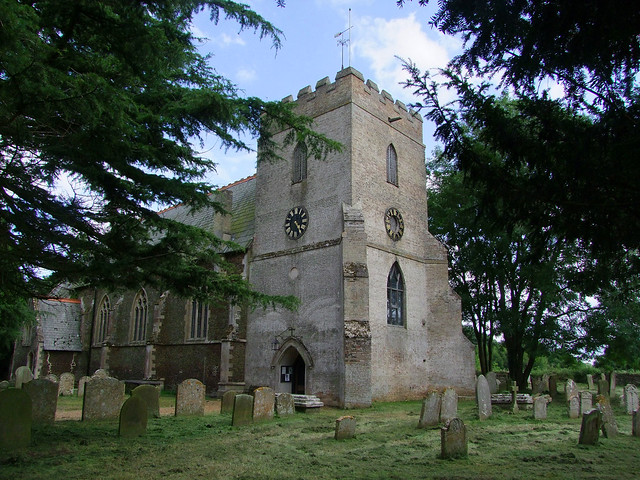
All Saints, Hilgay
Read
the captions by hovering over the images, and click on them to
see them enlarged.
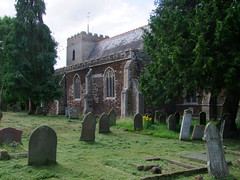
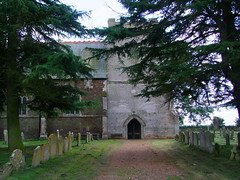
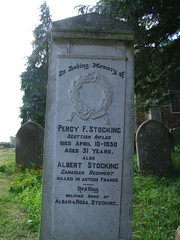
All
Saints, Hilgay
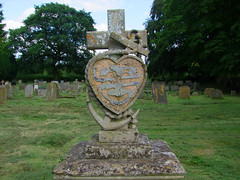
The large
gravestone with an anchor, cross and heart on this side
of the graveyard is striking, and you might think at
first it is the memorial to Hilgay's most famous son,
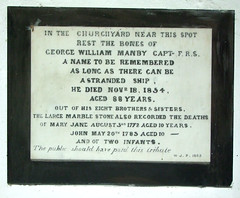
Captain Thomas Manby. Manby was the inventor of the Manby
cradle, a device for rescuing sailors from stranded ships
at sea (I hope you're taking notes, there will be a test
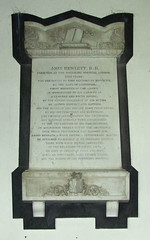
at the end) but in fact it isn't. His memorial is inside
the church. When I came here in 2005, this large
memorial, which actually depicts the Christian virtues of
Faith, Hope and Charity, still had a heart-shaped
lead-plate with the name and details of the grave's
inhabitant, but it won't surprise you to learn that this
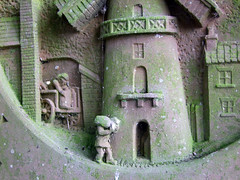
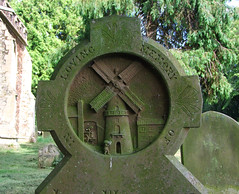
has long since been stripped away. The best memorial on
this side of the church is to John Whittowe, who died in
1891. It features a deeply cut relief of a windmill, the
workers busy unloading sacks of grain from the back of a
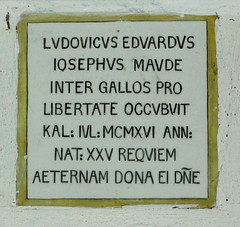
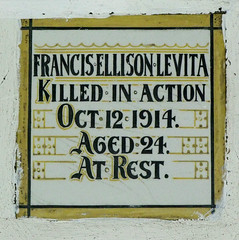
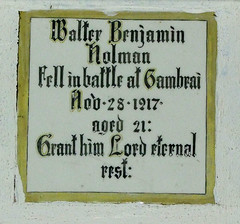
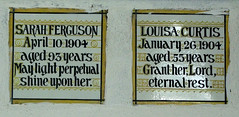
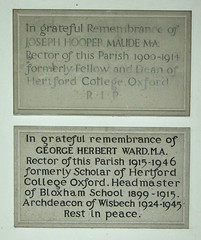
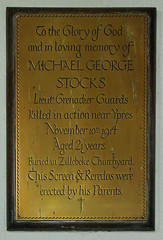
cart. A fashion which never really caught on, more's the pity, was the practice of placing encaustic memorial tiles on the wall. This seems to have arisen in the 1880s, and had more or less disppeared by the 1920s. There are some at Hilgay, which are particularly interesting because they include three to boys killed in the trenches of the First World War. One of them is in Latin: Ludovicus Eduardus Iosephus Maude, it reads, inter gallos pro occubuit kal: Iul:MCMXCI ann: nat: XXV Requiem aeternam dona ei Domine. This translates as 'Louis Edward Joseph Maude, who died in the war for freedom, first day of July 1916 aged 25. Grant him eternal rest Lord.' Which is to say, of course, that young Louis Maude died on the first day of the Battle of the Somme.
There is a
good set of 15th century benches with animals on some of
the ends, including a rather disturbing anthropomorphic
creature that I suppose must be something from a
bestiary. From a century or so later comes the memorial
to Henry and Ursula Hawe in the south aisle chapel.
|
Simon Knott, July 2016

Amazon commission helps cover the running costs of this site.
home I index I latest I introductions I e-mail I about this site I glossary
Norwich I ruined churches I round tower churches I links I small
print
www.simonknott.co.uk I www.suffolkchurches.co.uk