home I index I latest I glossary I introductions I e-mail I about this site
St Mary, Hickling


Follow these journeys as they happen at Last Of England Twitter.
| St Mary,
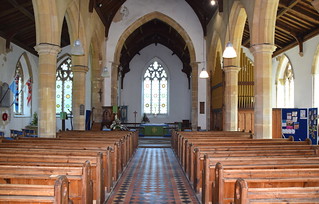
Hickling This great big
church sits above its Broadland village, a mighty tower
to taunt the lesser churches to the north and east. Here,
a lot of money was spent in the 14th and 15th centuries.
The aisles came first, and then the tower, the English
church triumphant in the years after the Black Death. The
breaking up of the old estates had brought to power a
new, fabulously wealthy land-owning class, and they
poured their money into churches like this one, creating
a Brave New England in their own image. There is no
clerestory, and the box-like chancel seems quite out of
sorts with the magnificence of the nave and tower. It is
the first suggestion that there was an overwhelming
restoration here in the 1870s.
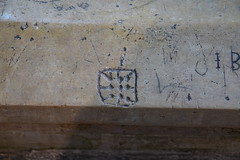
Perhaps most striking of all is the
bold scrawl ROUNDHEADE 1645. This was the very
year of John Wilson's 'pious call for a new purity and
single-heartedness', A New Anatomie or Character of a
Christian, or a Roundheade. Could it be that the
scrawler had read this pamphlet and wanted to declare his
support for it here? It was the year of the great
Parliamentarian triumph, victory over the forces of the
Crown at the Battle of Naseby. From this moment, Charles
I was doomed, and the world began to turn upside down. Simon Knott, September 2019 Follow these journeys as they happen at Last Of England Twitter.
|
|
|||||||||||||||||||||||||||||||||||||||||||||||||||||||
|
|||||||||||||||||||||||||||||||||||||||||||||||||||||||
home I index I latest I introductions I e-mail I about
this site I glossary
Norwich I ruined churches I desktop backgrounds I round tower churches
links I small
print I www.simonknott.co.uk I www.suffolkchurches.co.uk