home I index I latest I glossary I introductions I e-mail I about this site
St Mary, Hassingham


Follow these journeys as they happen at Last Of England Twitter.
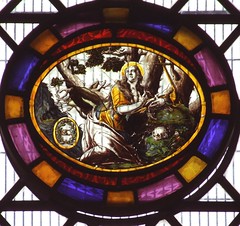
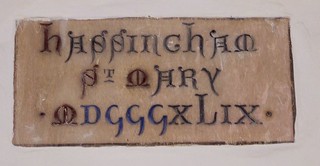
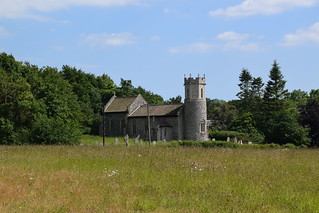
St Mary, Hassingham Norfolk can have few more beautiful settings for a church than here at Hassingham. St Mary sits elegantly in its steep churchyard on a bank below the woods and above the winding, deeply cut lanes where the land falls away to the marshes and the River Yare beyond. This is not a landscape designed for cars, but what a joy it is to cycle or walk around this rolling, secretive area between Norwich and Reedham! When I first explored this area some twenty years ago, most of its churches were kept locked, but with a few exceptions they are now open every day. One of those few exceptions is, I'm afraid, Hassingham, but at least there is a keyholder notice now. The churchyard was idyllic when we revisited on a beautiful day in June 2022, the headstones adrift among the wild flowers and long grasses. A 19th Century marker beside the path reads Keep thy foot when beneath our feet and o'er our head is equal warning given, beneath us lie the countless dead, above us only heaven. O gently gently shouldst thou speak and softly softly tread, where in the church's peaceful shade with solemn words the Dead are laid in their last lowly bed. There's another one of these markers at neighbouring Buckenham. Hassingham's church is curious of aspect, because unusually for a humble round-towered church it has a tall chancel, which creates an illusion of the building climbing the bank. The Norman south doorway is simple and yet lovely, one of several such around here which suggest a more homely approach to decoration in the 12th Century than some of the more glamorous, grand Norman doorways on the other side of the river. However, much has happened here since. The 15th Century brought new windows and the elegant flushwork bell stage of the tower, and then a plaque above the south doorway remembers the rebuilding of the body of the church in 1849. I assume that the height of the chancel replicates what was there before. This is an early date
for a 19th Century restoration, and so inside you might
expect a fairly rustic, low-brow interior, before the
ecclesiologists and ritualists came along and explained
what the Gothic Revival should be about. In fact, this
church was destroyed by fire in 1971, and the interior as
we see it today dates almost entirely from after that
date. This kind of thing is not always done well, but at
Hassingham I think it was. The walls are white, the
floors are brick, and the furnishings so simple that they
are barely there. The font from the 1849 restoration
survives. The clear glass of the nave fills the building
with light, and then up in the chancel is a small
collection of old glass. That in the east window includes
continental roundels of the 17th Century, while in the
side windows are angel musicians which incorporate some
fragments of 15th Century Norwich School glass. It is a
place to lift the heart, and how good it would be if this
church could be open to the pilgrims and strangers who
wander these lonely lanes! Simon Knott, June 2022 Follow these journeys as they happen at Last Of England Twitter.
|
|
|||||||||||||||||||||||||||||||||||||||||||||||||||||||
home I index I latest I introductions I e-mail I about
this site I glossary
Norwich I ruined churches I desktop backgrounds I round tower churches
links I small
print I www.simonknott.co.uk I www.suffolkchurches.co.uk