home I index I latest I glossary I introductions I e-mail I about this site
St Mary, Cranworth

Follow these journeys as they happen at Last Of England Twitter.
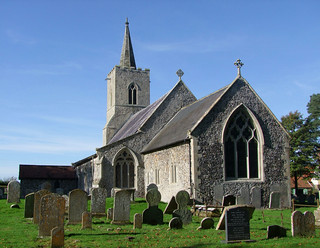
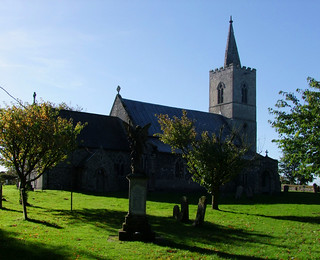
St Mary, Cranworth St Mary sits in the
middle of this village to the north-west of Hingham. If
you came here from the parish's other church at
Southburgh, as we did, the first thing that would strike
you is that they are both in the Decorated style with
spires on their towers, but Southburgh is a Victorian
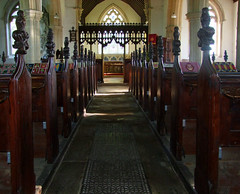
imitation, while Cranworth is splendid, the real thing. You step into what is
an overwhelmingly 19th Century interior, heavy Victorian
furnishings brooding sulkily, the nave hemmed in by the
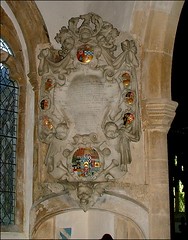
imposing memorials flanking the north and south walls in
the narrow aisles. Mostly they are to the Gurdons, who
lived at Letton Hall. This was their church. The most
interesting one perhaps is the one in the north-east
corner which is emblazoned with their shields, for it
remembers a Gurdon who led a regiment at the Battle of
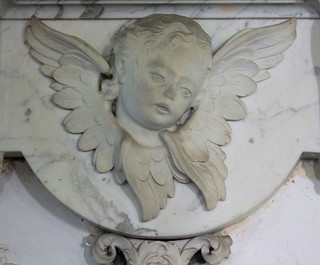
Naseby. Directly opposite, above the old entrance to the
rood loft stairs, is the memorial to Sir William Cooke,
who died in 1698. The winged skull at the base must have
had a sobering effect on parishioners over the years. Simon Knott, November 2020 Follow these journeys as they happen at Last Of England Twitter. |






|
|||||||||||||||||||||||||||||||||||||||||||||||||||||||
|
|||||||||||||||||||||||||||||||||||||||||||||||||||||||
home I index I latest I introductions I e-mail I about
this site I glossary
Norwich I ruined churches I desktop backgrounds I round tower churches
links I small
print I www.simonknott.co.uk I www.suffolkchurches.co.uk