| |
|
St Mary,
Cranwich
 |
|
The
day was coming to an end. During our journey
across the county, the clouds had dissolved; the
sun had been deceptive in its richness. But now,
the light thinned, the colours becoming one, and
it was early winter after all. Not far from the
great darkening spread of the forest, we turned
off of the road onto a long track which skirted
the fields. There was a smell of earth from the
ploughed furrows, and eventually the track
narrowed, petering out. We stepped into the cold
air, a blackbird piping in the copse as we
stepped through it. Across a
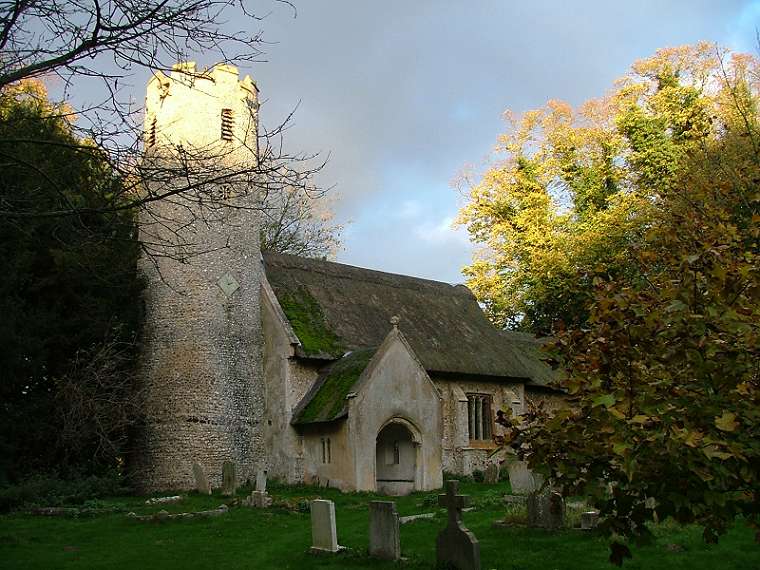
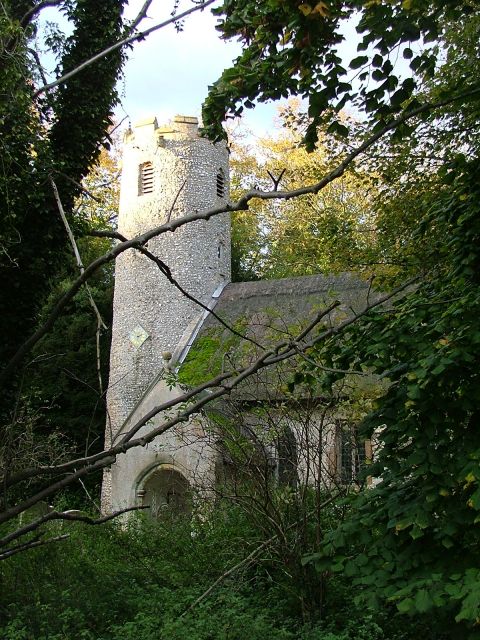
wide clearing, hidden in its own grove of ancient
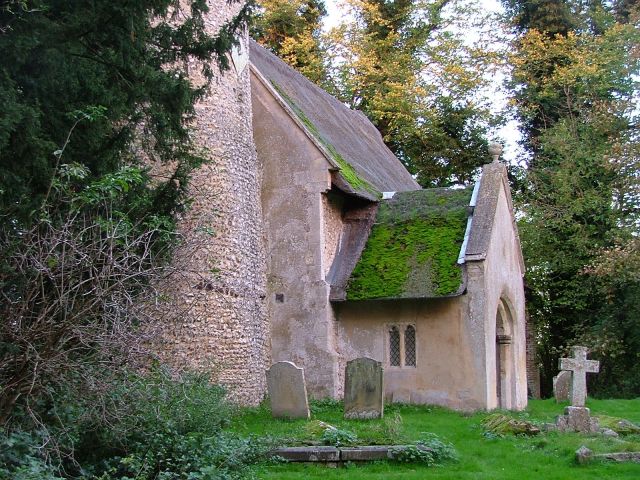
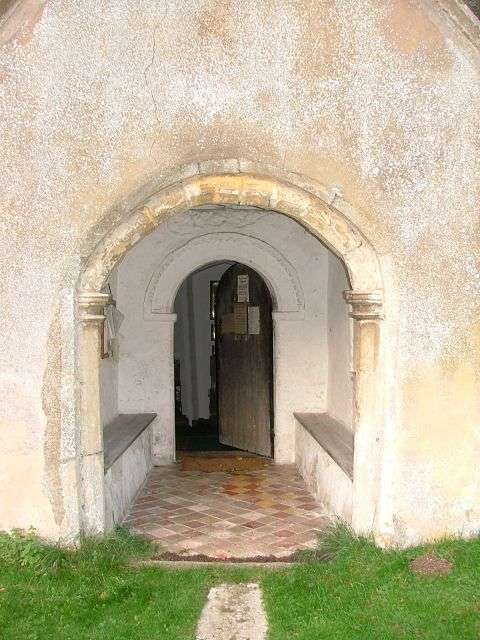
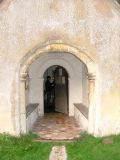
trees, was the tiny round-towered church of St
Mary, hunched behind its simple porch and under
its thatched roof. It was stunning, a moment
perfectly caught. No photograph could do it
justice. There was no path, so we waded through
the long grass and climbed over the low fence. It
was a magical place.
|
The tower
at Cranwich is one of the most ancient in all East
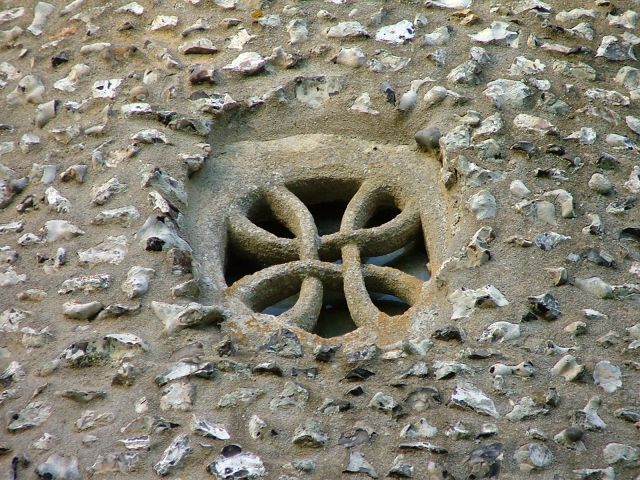
Anglia, a thin Saxon tower with a ring of carstone and,
higher up, a punctuation of extraordinary sound holes
with knotted tracery. Two hundred years later,
battlements and gargoyles were added, but then nothing
else happened. Similarly, the nave is Norman, the chancel
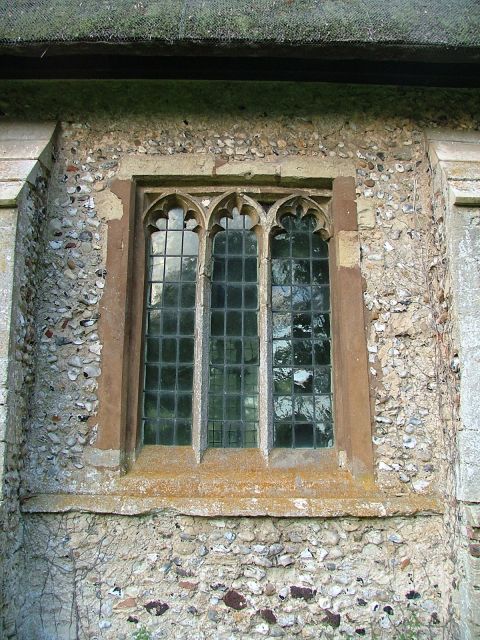
slightly newer. Several centuries later the late medieval
period contributed windows, but after that the structure
was complete, unaltered and barely repaired. Even the
porch is thatched, and even the thatch seems ancient,
moss-dank and dark from years of Norfolk winters.
| I
fully expected the church to be locked. We were a
long way from the village, and it was late in the
day, late in the year. I even wondered if the
building was still in use. But I pushed at the
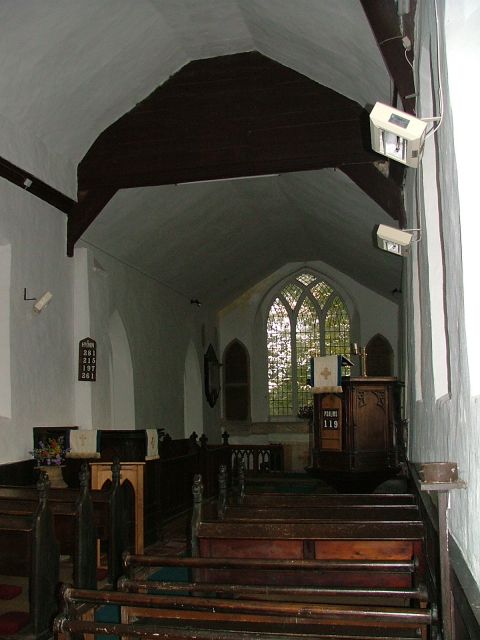
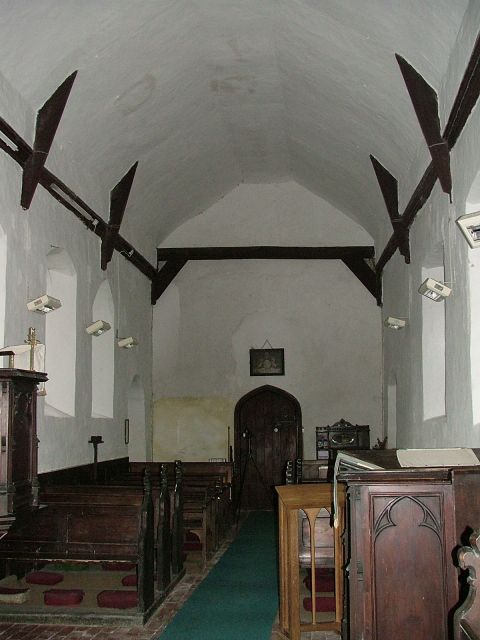
round-headed door, and it opened. Inside was
dark, and it took a moment to adjust. The
interior is very simple, a rustic 19th century
makeover, the kind I always find slightly sad; as
if the people it was designed for had slowly
left, one by one, until only the building was
left with its loss. The floors are brick, and
damp has coated stone surfaces with green, as if
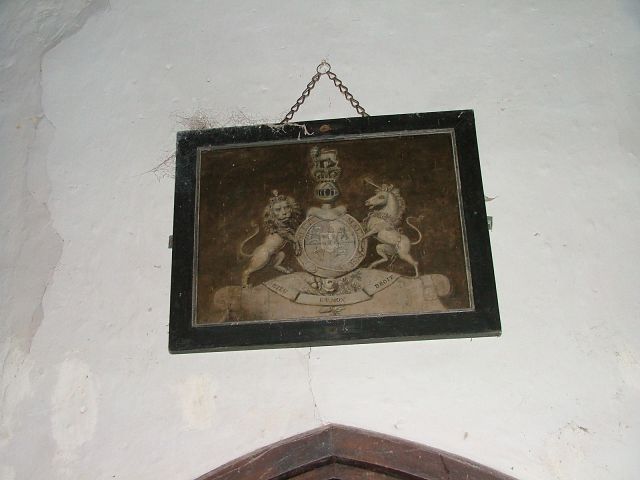
the forest is reclaiming its own. The ceiling is
plastered, with a simple wooden tympanum forming
the chancel arch. The woodwork, dark with
varnish, belies the silvery greyness all around;
even the royal arms are monochrome.
|
|
 |
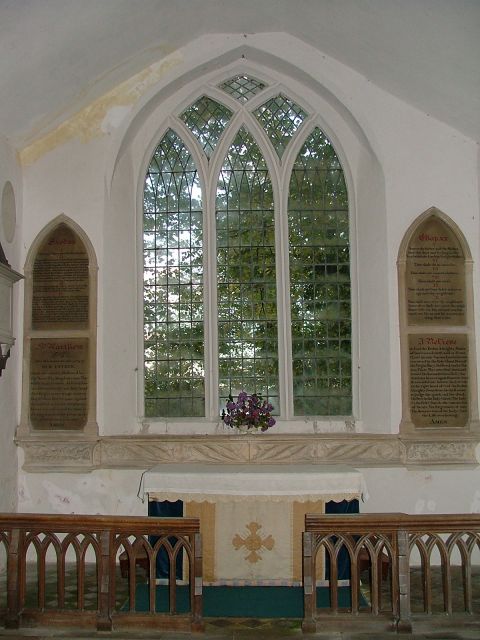
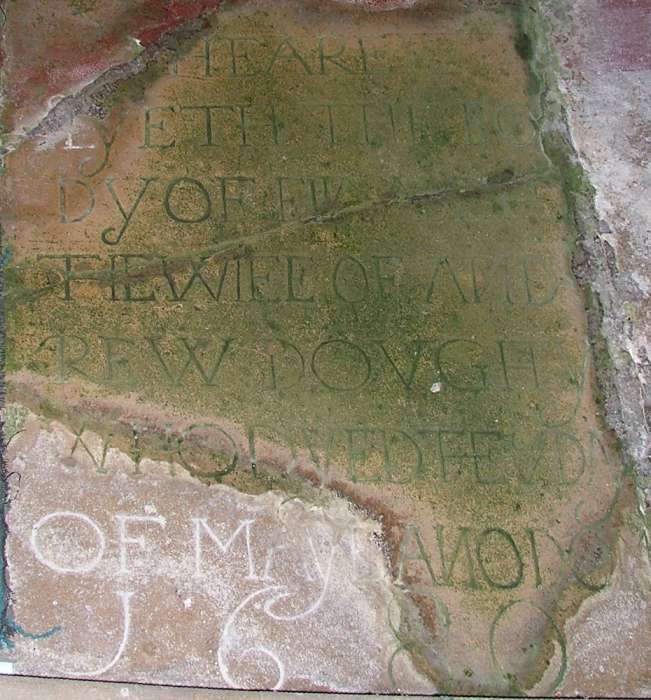
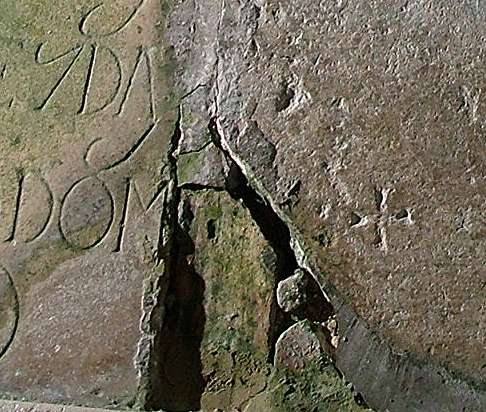
A ledger
stone in front of the sanctuary is carved elaborately,
but by a local hand. Beside it, missed by Pevsner, missed
by Mortlock, consecration crosses betray a medieval stone
altar mensa, reset in the floor. It must be the
original one from this church during its Catholic days,
for who would bother to bring one from elsewhere?
 |
|
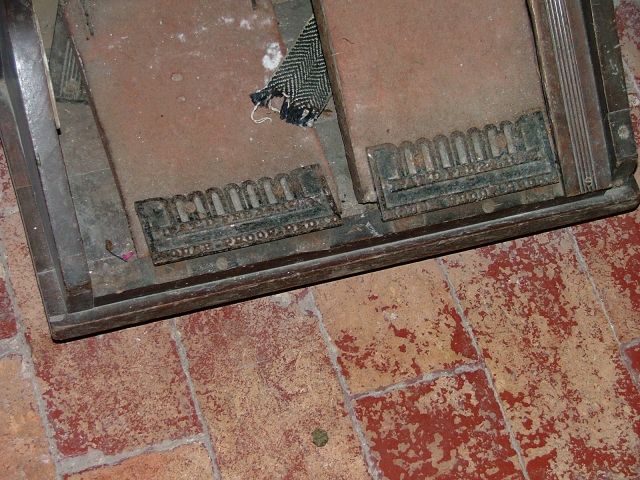
A
little harmonium sits against the west wall of
the nave. On its pedals it proclaims itself mouse
proof. There would not be rich pickings for
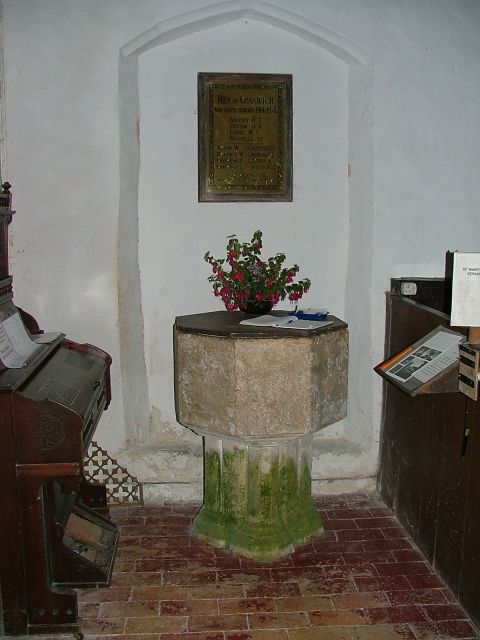
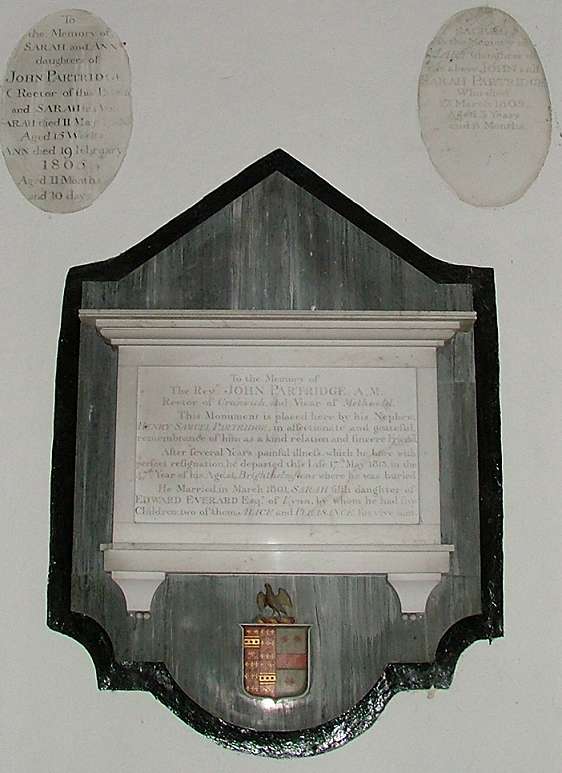
a mouse here today. The font is plain, the only
monument is one to John Partridge, a former
Rector, who after several years painful
illness, which he bore with perfect resignation,
he departed this life 17th May 1815, in the 47th
year of his life. The interior he knew has
gone, but he would recognise the perfect
simplicity of this place today. I wandered
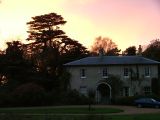
about the graveyard. I found a headstone facing
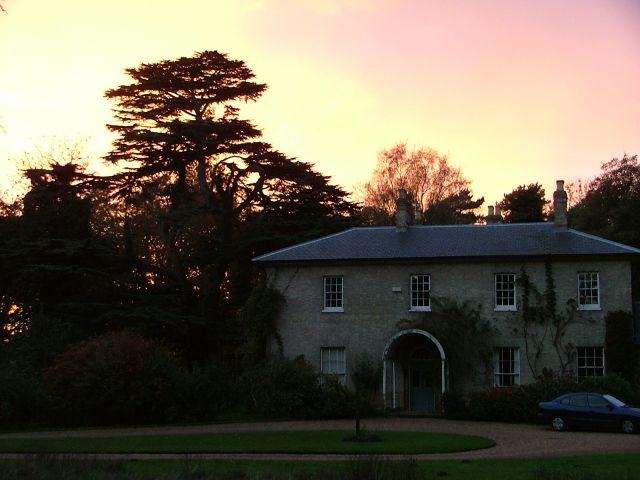
west, towards the old rectory, remembering
someone who died at the age of 106. As I looked
at it, I heard a noise from near the entrance to
the churchyard. I looked up, and there was a
woman carrying a small camera. "Did you see
it?" she asked breathlessly. "Did you
see the sun on the tower?"
|
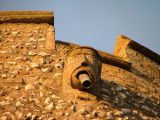
As it
happened, on stepping out of the building I had noticed
the last rays of sunlight slanting across the treetops on
to the peak of the tower, and had taken the photograph of
the gargoyle you can see on the left. We compared images
on the backs of our cameras. She flicked through perhaps
forty shots, all of the church, all taken within the last
few days. She explained how she visited the church
regularly to photograph it, but also to tug away the ivy
that had encroached on the walls, the moss from the
roofs, and to document the headstones before they were
gone forever.
These were
her words, and I assumed her to be a member of the
congregation, perhaps even a churchwarden; but no. She
lived not far off, and often came this way when out
walking. She told us that the church had a congregation
of about half a dozen, but they were all elderly people,
none with the energy or inclination to clear the
churchyard. Perhaps they had not even noticed that it was
disappearing back into the forest. She had never even
been to a service; it was quite likely that the people
who 'owned' the church did not even know she existed. And
yet here she was, nearly every day.
| 2009:
Well, that was almost five years ago. Lots of
people have contacted me to say how wonderful
they thought the Good Samaritan of Cranwich was.
Others have contacted me to ask exactly where
Cranwich church is, so that they can go and visit
it. The church remains for me a perfect example
of all that a rural medieval church should be, an
aesthetic pleasure, and one of my favourite
little churches of all. I have revisited several
times since 2004. And, since that time, things
have happened. There has been a burgeoning of
interest among the people of the parish. Cranwich
church has received a grant from English Heritage
to carry out necessary repairs, and the
congregation has been galvanised into action.
This really is a place where there is a sense of
a living church: the heart of its faith
community, yes, but also a prayerful space for
anyone who visits it, be they local or not, and a
touchstone down the long Cranwich generations. |
|
 |
Simon Knott, December 2004, updated
April 2009
|
|
|