home I index I introductions I e-mail I about this site
All Saints, Chedgrave
Read
the captions by hovering over the images, and click on them to
see them enlarged.
All
Saints, Chedgrave
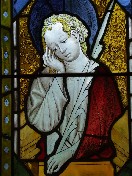
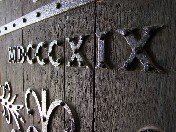
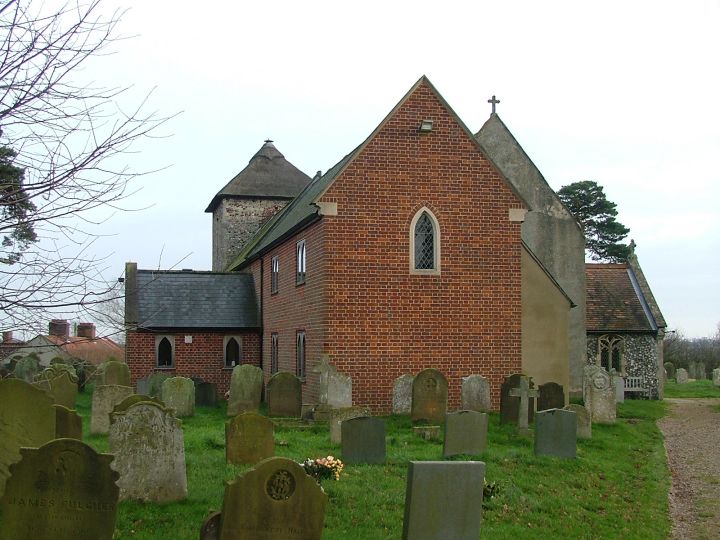
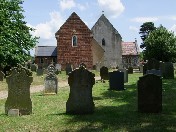
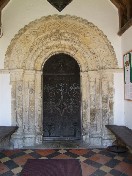
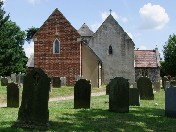
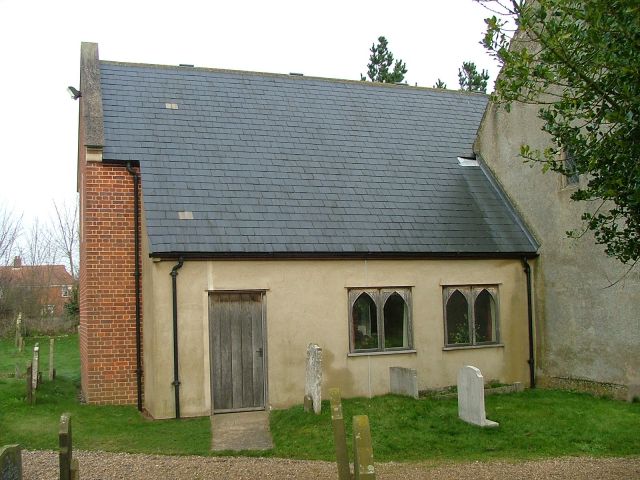
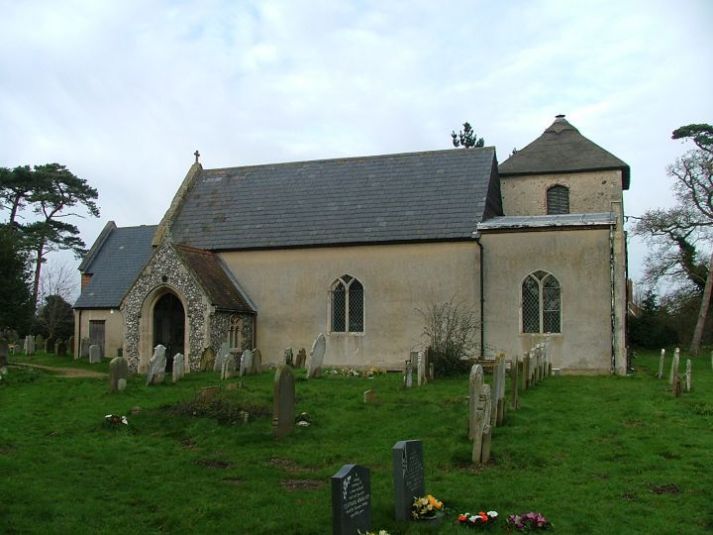
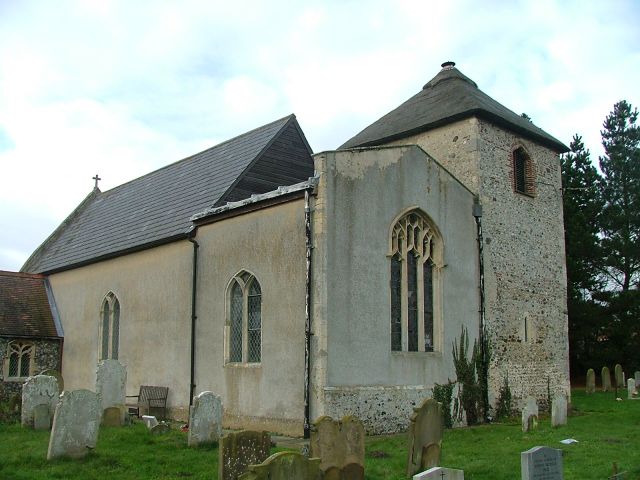
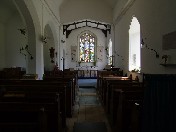
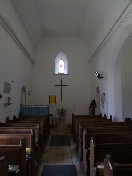
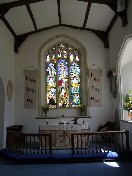
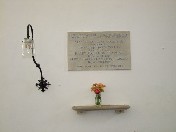
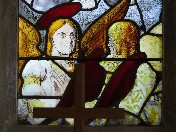
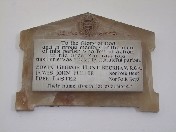
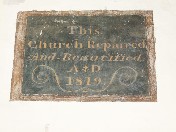
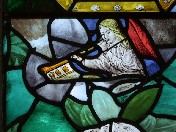
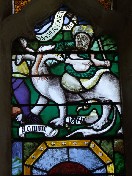
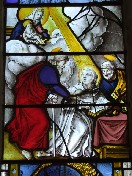
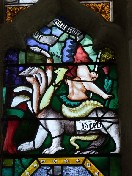
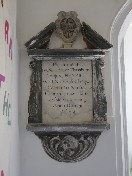
What a strange building this is! For a moment, it is difficult to read. The 1990s extension westwards of the north aisle is drastic. As Bill Wilson, Pevsner's revising editor, says, it is like a two-storey house hitting you in the face. It would be a shame if all churches looked the same, of course. Curiously, when they were laying the foundations for the extension they discovered the remains of a western round tower, but today the only medieval tower is to be found to the north of the chancel; this was substantially restored by the Victorians, but the nave to the west of it is certainly Norman, as you can tell by the doorways. The Georgians built a brick north aisle stretching back from the tower. Pevsner suggests that the tower is in fact a heightened north transept from the 12th century, but I don't think this is so. I suspect it was built on firmer ground to replace a round tower which was subsiding, probably in the 12th Century. The fine Norman doorway sheltered by the porch contains a door labelled 1819 in ironwork Roman numerals, which is a nice touch. A faded plaque tells us that this church was repaired and beautified AD 1819, a date which would explain the pleasingly un-ecclesiological feel to the interior. Given the lack of windows, All Saints is surprisingly full of light. The eye is drawn eastwards to the collection of continental glass, mainly of the 16th and 17th Centuries. In a memorable scene, St Paul and St Peter appear to St Dominic and help him to interpret scripture, while the Blessed Virgin and Christ child send down inspiration from above. The glass is part of the collection made by John Hampp for the Beauchamp Proctor family of Langley Hall, and seems to have come mainly from Rouen Cathedral in the years after the French Revolution. There is more of it at Thurton and Langley. I assume that it was all set in place by Samuel Yarrington, the famous Lowestoft glassmaker, as part of the 1819 restoration, but the King workshop restored it all again in the 1960s.
Simon Knott, January 2005, update July 2009 |

home I index I latest I introductions I e-mail I about this site I glossary
links I small
print I www.simonknott.co.uk I www.suffolkchurches.co.uk
ruined churches I desktop backgrounds I round tower churches