home I index I latest I glossary I introductions I e-mail I about this site
St Margaret, Burgh St Margaret
Read
the captions by hovering over the images, and click on them to
see them enlarged.
| St
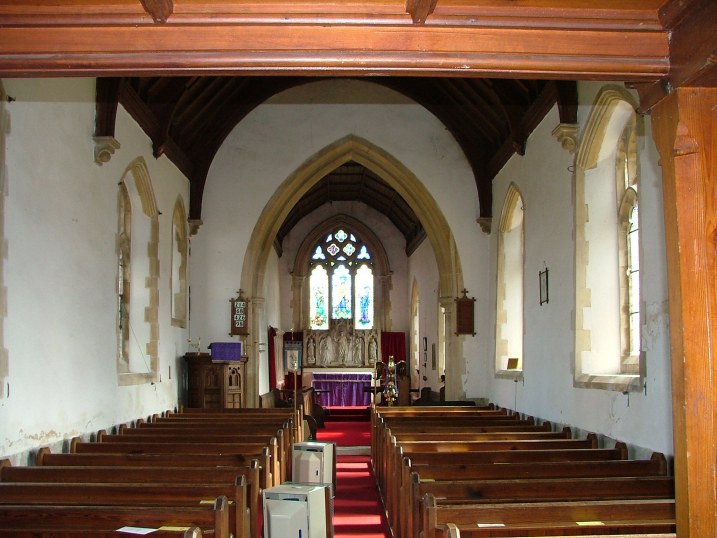
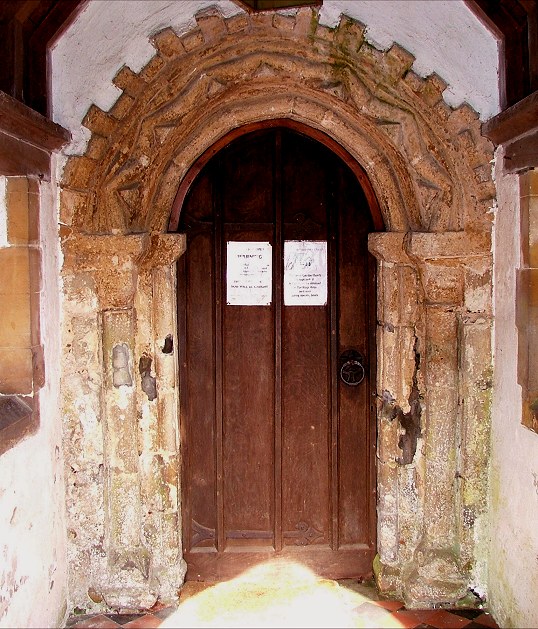
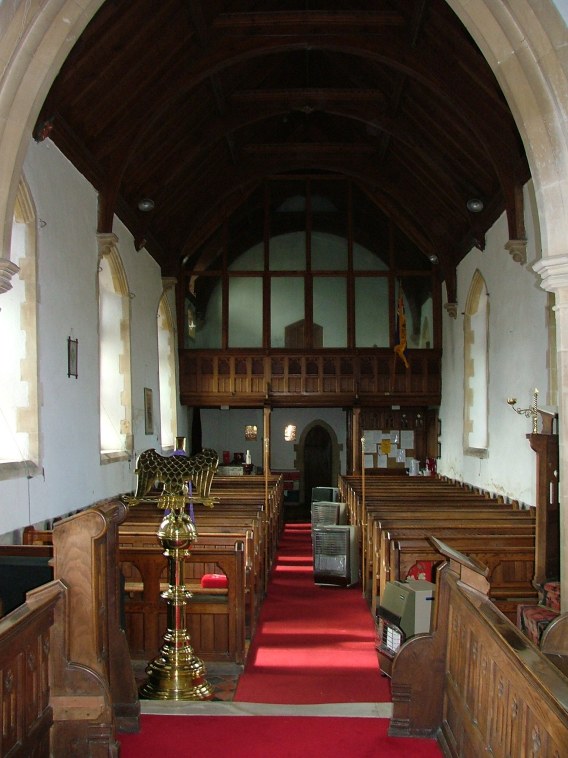
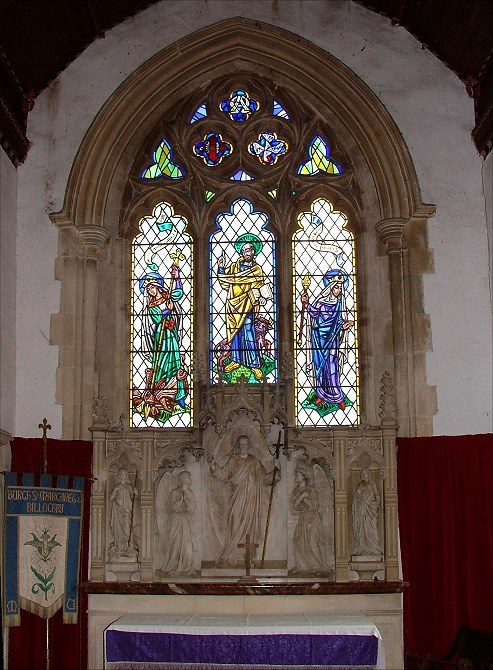
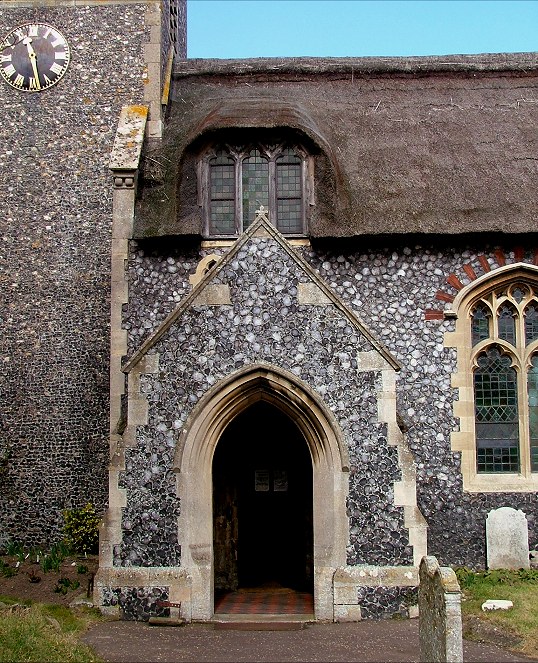
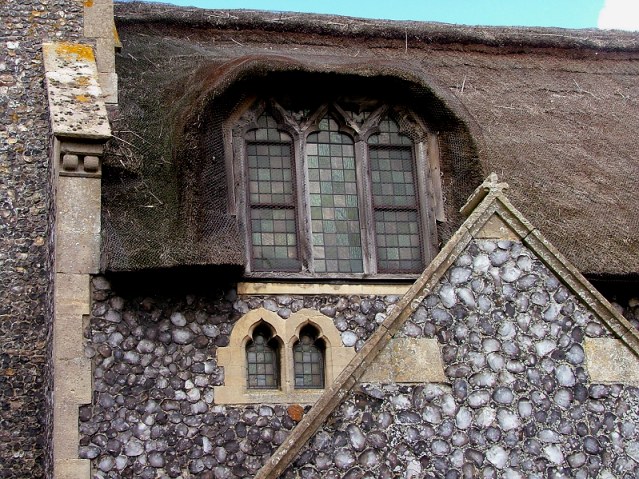
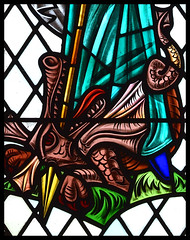
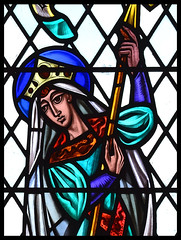
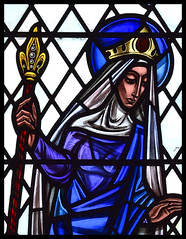
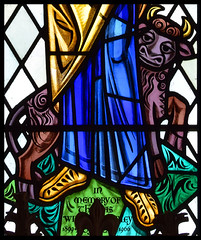
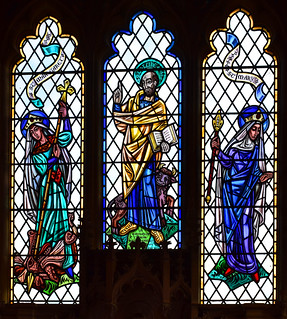
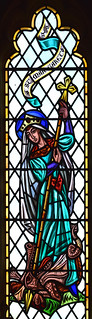
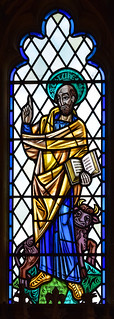
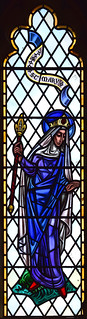
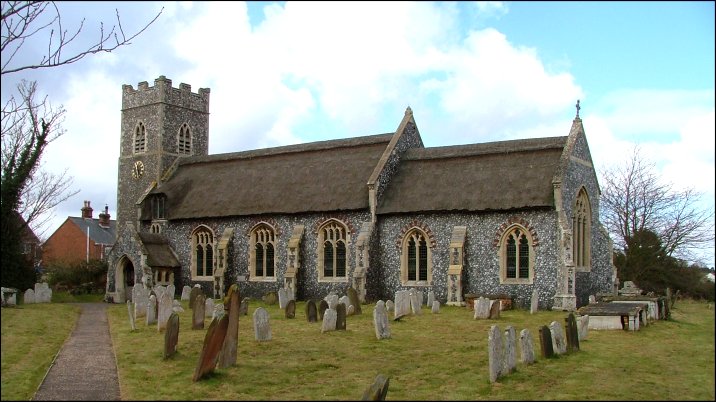
Margaret, Burgh St Margaret Along with his predecessor Richard Phipson, Green bestrides the landscape of church Victorianisation in East Anglia. The bodies of their work are considerable, and it wasn't just their own plans; anyone else's work would also have to cross their desks for them to cast a cold eye upon it. Their enthusiasms were as different from each others as it is possible to be, I suppose. Phipson was a technician, with an eye for detail. In restorations, his innovations blend fairly seamlessly into the medieval, which sounds good, but often leaves a rather dour, characterless atmosphere. Sometimes he went mad, producing extraordinary spires on a couple of churches in the Stowmarket area, and he could be very impressive on a grand scale, such as the complete rebuilding of St Mary le Tower in Ipswich. Herbert Green, on the other hand, was a Victorian first and an medievalist second. Sometimes it is hard to see the medieval origins at all behind his rebuildings, scourings and facades. Here at Burgh, he built a 'Perpendicular' nave and a 'Decorated' chancel and tower, which is of course exactly the relationship you find at so many rural medieval churches in East Anglia. It's just that here it isn't real - to all intents and purposes, this is a faux medieval Norfolk parish church. I came here at the end of March with Chris Harrison, who knows the churches of this part of Norfolk well. To see inside, we got the key from the pub next door, and then we went in through its one significant medieval survival, the Norman south doorway. As with several around here, this is rather crudely carved, and is therefore presumably earlier than the more elaborate arrays you find further south in the Loddon area. Inside, everything is Herbert Green's, pretty much. There is no tower arch, just a doorway, through which you can access the gallery. A matter of taste is the east window, in uninhibited 1960s cartoon style. It features the figures of St Margaret, St Luke and the Blessed Virgin. I rather like it; St Luke's bull in particular is very characterful, and St Margaret dispatches her dragon with aplomb. Mary, who is shown as the Queen of Heaven, is a little less vigorous than the other two figures. Her lack of an accompanying animal throws the whole composition out of balance, and you wonder why she wasn't placed in the central light. So, a small, fairly elegant little building that must rank among Green's best work. I was pleased we'd seen inside. I signed the visitors book before we returned the key, and I noticed that the visitor immediately before me had been one Cameron Newham, back in October 2005. This was a little sad, and not only because the two of us had been the only visitors here, one at each end of the long, cold winter. I had actually met Cameron Newham, several times. The first time had been some four years previously. I'd had a fairly lengthy e-mail correspondence with him, because some of our interests had coincided. In his spare time, he was working on an extraordinary project, much more ambitious than mine. He had a fascination with a series of books, the Buildings of England, which had been produced in the 1950s and 1960s under the auspices of the architectural historian Nikolaus Pevsner. This county-by-county guide to the nation's significant buildings has been updated since, most recently for Norfolk in the 1990s by Bill Wilson. Newham's plan was to exhaustively photograph, inside and out, every building in England that Pevsner had noted as being of significance. We went to look at some Suffolk churches together. I didn't know quite what to expect. A tall, slight Australian, then in his late thirties, unfolded himself from his sports car outside Bury railway station, and shook my hand. He was guarded and shy, but he certainly knew his stuff. And his project was really quite remarkable, requiring stamina in quantities that I did not know existed. He planned to collate his hundreds of thousands of images on to CD-roms, to create a series that he called the Digital Atlas of England. Newham moved to Suffolk, to record the East Anglian counties, and over the next year or so he gave me several versions of the Digital Atlas to try; but there was a nagging doubt in my mind. He planned to sell the CD-roms to libraries, educational institutions and the like; but, working in a school myself, I knew that such places were buying fewer and fewer CD-roms, preferring to subscribe to on-line resources, and I told him so. Later, he produced an on-line version, which I assume is a modest success, but it did not appeal to me. There was something soulless and dispiriting about trawling through hundreds and hundreds of images with dry academic captions. I was also a bit concerned that when parishes discovered someone was selling photographs of their churches, they might not be quite so willing to let other visitors come and take photographs for free. I decided that if I couldn't say something nice then it would be best to say nothing at all, so I kept quiet. And so our correspondence fell silent. I was busy with my family and my work, and I had assumed that Newham was finding plenty to occupy himself with his project. Six months went by; and then something extraordinary happened. A correspondent pointed me in the direction of an internet blog being written by someone calling himself James Fielding. It was attached to Newham's Digital Atlas of England site, and it was an account of church-visiting activities; but, interspersed with these notes, there was a series of spiteful attacks on my Suffolk Churches site, and on me personally. What on earth was going on? Newham and Fielding were obviously the same person. He had used pseudonyms before. But why the bitterness and the personal attacks? Simon Knott, March 2006 |
Amazon commission helps cover the running costs of this site.
home I index I latest I introductions I e-mail I about this site I glossary
links I small
print I www.simonknott.co.uk I www.suffolkchurches.co.uk
ruined churches I desktop backgrounds I round tower churches