home I index I latest I glossary I introductions I e-mail I about this site
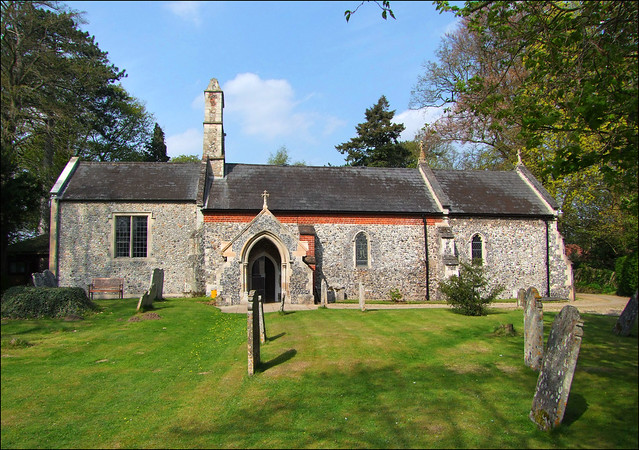
St Lawrence, Brundall

Follow these journeys as they happen at Last Of England Twitter.
St Lawrence, Brundall The Broads begin at
Brundall. This is furthest outer Norwich, and it is as if
Brundall, and particularly adjoining Brundall Gardens,
were Norwich's Metroland, with two railway
stations, bowling greens, boats on the river and 1920s
mock-tudor in abundance. How Betjeman must have loved it.
And I liked it a lot too, for when I first came here I
had been cycling in nearby parishes which had an
unenlightened attitude to church-opening. It was a
pleasure to come here and be able to step inside this
lovely space, and on the occasions I've visited since I
have always found this church open.
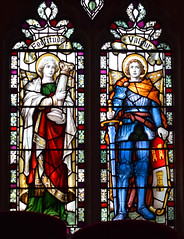
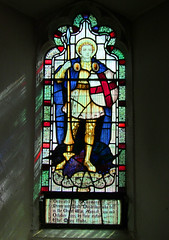
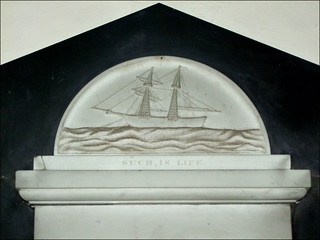
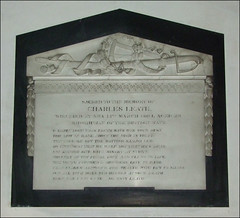
There is glass by Clayton and Bell, and Kempe & Co, none of it very exciting or particularly intrusive, but it does let coloured light fall across the dark wood furnishings in an atmospheric way. In the north aisle, and probably installed here as part of the restoration in 1900, there is a markedly good roundel of continental glass depicting the church's patron saint with his grid iron. It is probably 18th Century I should think, unless it is one of those clever copies by the King workshop. Certainly of the 20th Century is the set of royal arms above the south door, because it is for Elizabeth II, one of several sets in East Anglia but probably the only one which appears to be painted on a fibre glass panel. The view eastwards is to the early 20th Century roodscreen and the darkness of the chancel beyond. You can see that St Lawrence was restored for shadowy, incense-led worship. Once while I was visiting this church an old gentleman came in to 'prepare the altar' for the following day's weekday communion, which probably doesn't happen in a lot of churches these days. On another occasion I came during Lent, and the simple wooden reredos was veiled in purple with a purple frontal on the altar below, the only place I saw this that day. Either side of the altar on the sanctuary walls are 19th Century memorials. The one on the south side is to Charles Leath, Midshipman of the British Navy... who died at sea in 1804. The memorial features his sword and sextant in relief at the top. Even more striking is the memorial on the opposite wall. It dates from half a century later, and remembers Robert Cubitt and his wife Henrietta. The relief depicts a schooner with its sails furled, basking on a choppy sea. Under the relief are the words Such is Life. Simon Knott, November 2020 Follow these journeys as they happen at Last Of England Twitter. |






|
|||||||||||||||||||||||||||||||||||||||||||||||||||||||
|
|||||||||||||||||||||||||||||||||||||||||||||||||||||||
home I index I latest I introductions I e-mail I about
this site I glossary
Norwich I ruined churches I desktop backgrounds I round tower churches
links I small
print I www.simonknott.co.uk I www.suffolkchurches.co.uk